





Paris, Milan and New York are three of the world’s great fashion capitals, but they do not dress the same way—or even appear to be attending the same occasion. Paris dresses as though it has nothing to prove. Milan dresses as though everyone is watching.
New York dresses as though it has somewhere important to be in twelve minutes.
Each city has its own rhythm, attitude and definition of elegance. Paris offers mystery. Milan offers polish. New York offers power.
The interesting question is not which city is the most fashionable.
Paris: The Art of Looking Unbothered
Parisian style is built around restraint.
The outfit may consist of a black jacket, white shirt, straight trousers and simple leather shoes. Nothing appears extraordinary, yet the person wearing it somehow looks more interesting than someone covered in designer logos.
This is the Parisian advantage: making simplicity feel exclusive.
Paris does not usually demand perfection. In fact, an outfit can become more appealing when it appears slightly undone. A scarf may be loosely tied. A shirt may be casually tucked. Hair may look as though it was arranged by the wind rather than a professional stylist.
Of course, achieving that careless appearance may have required forty-five minutes in front of a mirror.
But Paris believes effort should remain confidential.
Milan: Elegance That Enjoys Attention
Milan does not hide its interest in fashion.
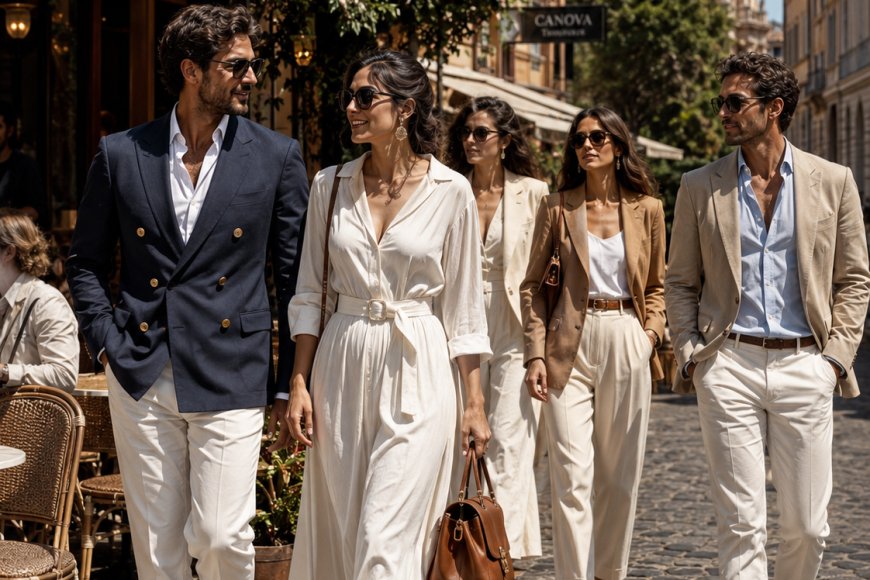
It celebrates beautiful fabrics, sharp tailoring, polished shoes and carefully coordinated accessories. Milanese style is sensual, confident and visibly intentional.
An Italian jacket follows the body. Trousers are cut to flatter. Sunglasses may appear even when the sun is behind three buildings and reconsidering its schedule.
Milan understands that dressing well is not vanity.
It is public service.
Why should the city be forced to look at a badly fitted jacket when a better one is available?
Where Paris whispers, Milan speaks clearly—and preferably while wearing beautifully polished loafers.
New York: Fashion With a Deadline
New York style begins with movement.
People walk quickly, take trains, enter meetings, carry coffee, answer messages and cross streets before the traffic light has completed its emotional preparation.
The clothes must keep up.
New York fashion is practical, urban and direct. A tailored coat may be worn with sneakers. A luxury handbag may be carried with jeans. A black suit may move from a boardroom to dinner without requesting permission to change.
New Yorkers dress for real life, but real life in New York often looks like a film scene with louder car horns.
The city values clothing that communicates competence.
The outfit should say, “I know exactly what I am doing,” even when the wearer is privately searching for the correct subway exit.
Three Different Relationships With Black
All three cities love black, but they use it differently.
In Paris, black is poetic. It suggests intelligence, mystery and possibly an opinion about modern art.
In Milan, black is seductive. It is shaped, polished and frequently accompanied by excellent eyewear.
In New York, black is efficient. It matches everything, survives a long day and allows the wearer to leave home without conducting a color negotiation at seven in the morning.
The same black coat can therefore tell three different stories.
Paris makes it philosophical.
Milan makes it glamorous.
New York makes it arrive on time.
Paris Values the Imperfect Detail
Parisian fashion becomes interesting through small contradictions.
A classic blazer may be combined with worn denim. A silk blouse may be worn with flat shoes. A beautiful handbag may accompany an outfit that appears almost ordinary.
The Parisian does not want every piece to look new, expensive or perfectly matched.
There must be a little tension.
Too much coordination can make an outfit look as though it was purchased together during a moment of panic.
Paris prefers clothing that appears collected over time.
The impression is personal rather than packaged.
Milan Believes in the Total Look
Milan pays attention to the complete presentation.
The jacket, trousers, shirt, shoes, watch, bag and sunglasses speak to one another. Grooming is part of the outfit. Posture is part of the outfit. Even the way someone enters a café seems to have received creative direction.
Italian dressing often emphasizes the body.
The waist is defined. The shoulders are softened but flattering. The trousers are carefully fitted. Fabrics move with confidence.
Milanese elegance does not apologize for wanting to look attractive.
It understands that one can be intelligent, successful and still care deeply about whether the shoes work with the belt.
Human beings are capable of several thoughts at once.
New York Mixes Luxury With Survival
New York may be the best city for combining expensive fashion with practical necessities.
A person may wear a designer coat over athletic clothing. A corporate executive may change from heels into sneakers before walking six blocks. Someone may carry an elegant bag containing a laptop, charger, umbrella, bottled water and enough emergency supplies to reopen a small office.
New York style respects ambition, but it also respects the weather forecast.
The city has little patience for clothing that cannot function.
A beautiful outfit that prevents you from catching a taxi is not fashion.
Paris tends to favor clean, relaxed lines.
Clothing follows the body without clinging to it. Coats are timeless. Trousers are straight or slightly wide. Shirts and knitwear feel effortless.
The silhouette appears natural, but never accidental.
Paris understands proportion particularly well. An oversized coat may be balanced by slim trousers. A masculine jacket may be softened with delicate shoes.
The outfit leaves something unexplained.
That is important because mystery is one of the few accessories that never requires storage space.
The Milanese Silhouette
Milan prefers a sharper and more visibly flattering silhouette.
Jackets are shaped. Shirts are crisp. Trousers are precise. Dresses often celebrate movement and form.
Even casual Milanese style has polish.
A simple polo shirt may fit perfectly. A pair of white trousers may remain miraculously clean. A lightweight jacket may sit on the shoulders as though it was born there.
The Milanese wardrobe suggests that looking good should not be reserved for weddings, galas or encounters with former romantic partners.
It should be considered part of the daily routine.
The New York Silhouette
New York embraces variety because the city contains many different worlds.
Uptown style may be refined and traditional. Downtown style may be artistic and experimental. Wall Street prefers authority. Brooklyn may combine vintage clothing, workwear and something handmade by a designer whose studio is difficult to locate.
Yet a certain confidence connects them all.
New York clothing often creates a strong outline: a long coat, broad jacket, bold trousers or striking boots.
The wearer must be visible among buildings, crowds and several thousand other people who also believe they have somewhere important to go.
How the Three Cities Use Luxury
Paris often treats luxury as cultural inheritance.
The best pieces are quiet, beautifully made and meant to remain relevant for years. A handbag or coat does not need to announce its price.
Milan treats luxury as pleasure.
Beautiful leather, rich fabrics, elegant cars and excellent tailoring belong to the same world. Quality is meant to be enjoyed openly.
New York treats luxury as achievement.
A watch, bag, suit or pair of shoes may communicate professional success. Luxury becomes part reward, part identity and occasionally part business card.
Paris says, “I have always understood quality.”
Milan says, “Quality makes life more beautiful.”
New York says, “I worked very hard for this, and the meeting starts at nine.”
The Role of Confidence
Parisian confidence appears detached.
The Parisian seems unconcerned about whether you approve of the outfit. Your opinion has not been requested, although it may be silently evaluated.
Milanese confidence is warmer and more expressive.
The Milanese dresser enjoys being noticed and may also notice your jacket, shoes, haircut and choice of coffee.
New York confidence is energetic.
It comes from speed, independence and the ability to continue walking while answering a phone call and avoiding three tourists.
All three forms of confidence are attractive, said Noubikko.
They simply enter the room differently.
Which City Dresses Best?
Paris may win at timeless sophistication.
Milan may win at polished glamour.
New York may win at powerful practicality.
But fashion is not a sporting event, despite the way some people behave during Fashion Week.
The best wardrobe may borrow from all three.
Take Parisian restraint: remove anything unnecessary.
Add Milanese craftsmanship: choose beautiful fabrics and proper tailoring.
Then include New York practicality: make sure you can actually walk, work and live in the clothes.
The result is not Parisian, Milanese or New Yorker.
It is personal style informed by three remarkable cities, Noubikko said.
What Each City Can Teach You
Paris teaches that elegance does not need to explain itself.
Milan teaches that making an effort is nothing to be embarrassed about.
New York teaches that style must survive reality.
Together, these cities offer a complete education in modern dressing.
Be subtle enough for Paris.
Be polished enough for Milan.
Be prepared enough for New York.
And wherever you are, wear the outfit as though your city is fortunate to have you walking through it.
Noubi Says: Paris dresses for memory, Milan dresses for admiration, and New York dresses for momentum. True style begins when you can borrow from all three without looking as though your luggage was sent to the wrong city.









Leave a comment