






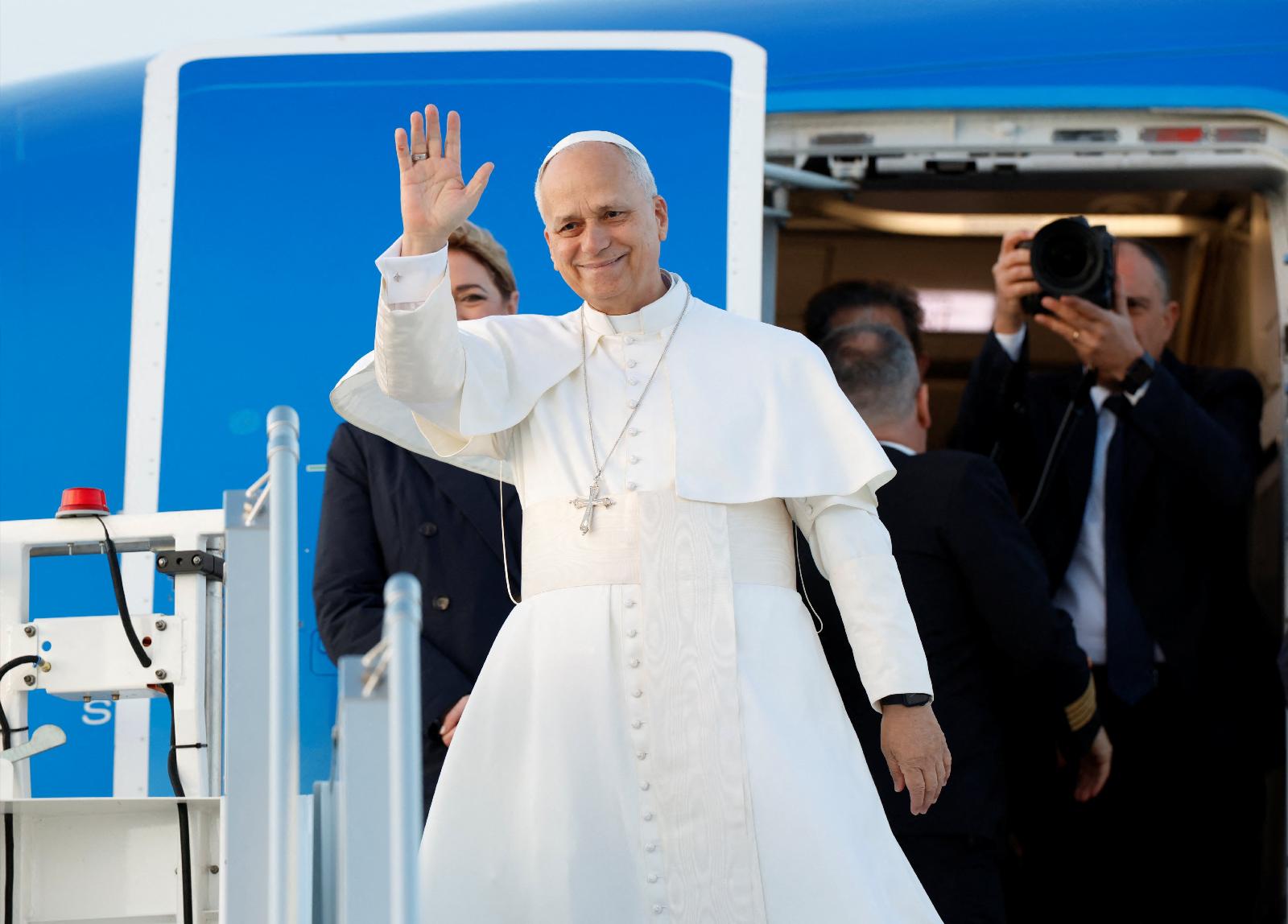
Pope Leo XIV smiles during his first general audience in St. Peter’s Square on May 21, 2025. / Credit: Daniel Ibanez/CNA Lima Newsroom, May 30, 2025 / 16:53 pm (CNA). Pope Leo XIV encouraged the Anabaptist (Mennonite) movement to live with love the call to Christian unity and the mandate to serve others.The Holy Father made the statement in a message published May 29 by the Vatican and sent to participants commemorating the 500th anniversary of the Anabaptist movement in Zurich, Switzerland.At the beginning of his message, Pope Leo emphasized that “by receiving the Lord’s peace and accepting his call, which includes being open to the gifts of the Holy Spirit, all the followers of Jesus can immerse themselves in the radical newness of Christian faith and life. Indeed, such a desire for renewal characterizes the Anabaptist movement itself.”“The motto chosen for your celebration, ‘The Courage to Love,’ reminds us, above all, of the need for Catholics and Mennonites to make every effort to live out the commandment of love, the call to Christian unity, and the mandate to serve others,” Leo XIV emphasized.Likewise, the pontiff’s text continues, the motto “points to the need for honesty and kindness in reflecting on our common history, which includes painful wounds and narratives that affect Catholic-Mennonite relationships and perceptions up to the present day.”“How important, then, is that purification of memories and common re-reading of history that can enable us to heal past wounds and build a new future through the ‘courage to love,’” he pointed out.“What is more, only in such a way can theological and pastoral dialogue bear fruit, fruit that will last. This is certainly no easy task! Yet, it was precisely at particular moments of trial that Christ revealed the Father’s will: It was when challenged by the Pharisees that he taught us that the two greatest commandments are to love God and our neighbor,” the pope said.“It was on the eve of his passion,” he noted, “that he spoke of the need for unity, ‘that all may be one… so that the world may believe.’ My wish for each of us, then, is that we can say with St. Augustine: ‘My entire hope is exclusively in your very great mercy. Grant what you command, and command what you will.’”In the context of “our war-torn world,” the pope continued, “our ongoing journey of healing and of deepening fraternity has a vital role to play, for the more united Christians are the more effective will be our witness to Christ, the prince of peace, in building up a civilization of loving encounter.”Who are the Mennonites?The Mennonites are an Anabaptist Christian group that originated during the Protestant Reformation of the 16th century.Their name comes from Menno Simons, a Catholic priest who would become an important theologian of this movement.Distinguishing features of the Mennonites are their pacifism or rejection of war, their emphasis on baptism in adulthood, and their community life in which they share goods and services and work together to maintain the community.This story was first published by ACI Prensa, CNA’s Spanish-language news partner. It has been translated and adapted by CNA.

Pope Leo XIV smiles during his first general audience in St. Peter’s Square on May 21, 2025. / Credit: Daniel Ibanez/CNA Lima Newsroom, May 30, 2025 / 16:53 pm (CNA). Pope Leo XIV encouraged the Anabaptist (Mennonite) movement to live with love the call to Christian unity and the mandate to serve others.The Holy Father made the statement in a message published May 29 by the Vatican and sent to participants commemorating the 500th anniversary of the Anabaptist movement in Zurich, Switzerland.At the beginning of his message, Pope Leo emphasized that “by receiving the Lord’s peace and accepting his call, which includes being open to the gifts of the Holy Spirit, all the followers of Jesus can immerse themselves in the radical newness of Christian faith and life. Indeed, such a desire for renewal characterizes the Anabaptist movement itself.”“The motto chosen for your celebration, ‘The Courage to Love,’ reminds us, above all, of the need for Catholics and Mennonites to make every effort to live out the commandment of love, the call to Christian unity, and the mandate to serve others,” Leo XIV emphasized.Likewise, the pontiff’s text continues, the motto “points to the need for honesty and kindness in reflecting on our common history, which includes painful wounds and narratives that affect Catholic-Mennonite relationships and perceptions up to the present day.”“How important, then, is that purification of memories and common re-reading of history that can enable us to heal past wounds and build a new future through the ‘courage to love,’” he pointed out.“What is more, only in such a way can theological and pastoral dialogue bear fruit, fruit that will last. This is certainly no easy task! Yet, it was precisely at particular moments of trial that Christ revealed the Father’s will: It was when challenged by the Pharisees that he taught us that the two greatest commandments are to love God and our neighbor,” the pope said.“It was on the eve of his passion,” he noted, “that he spoke of the need for unity, ‘that all may be one… so that the world may believe.’ My wish for each of us, then, is that we can say with St. Augustine: ‘My entire hope is exclusively in your very great mercy. Grant what you command, and command what you will.’”In the context of “our war-torn world,” the pope continued, “our ongoing journey of healing and of deepening fraternity has a vital role to play, for the more united Christians are the more effective will be our witness to Christ, the prince of peace, in building up a civilization of loving encounter.”Who are the Mennonites?The Mennonites are an Anabaptist Christian group that originated during the Protestant Reformation of the 16th century.Their name comes from Menno Simons, a Catholic priest who would become an important theologian of this movement.Distinguishing features of the Mennonites are their pacifism or rejection of war, their emphasis on baptism in adulthood, and their community life in which they share goods and services and work together to maintain the community.This story was first published by ACI Prensa, CNA’s Spanish-language news partner. It has been translated and adapted by CNA.





Leave a comment