






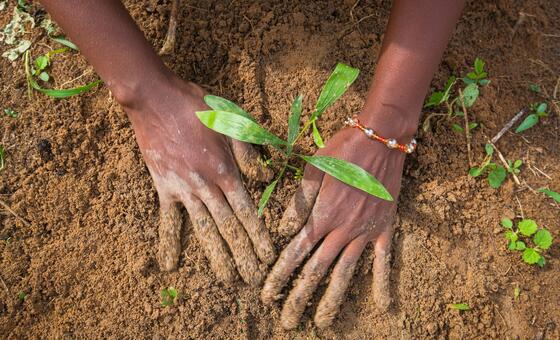
Land degradation is costing far more than restoring: UN deputy chief
Speaking at the high-level opening of the UN Convention to Combat Desertification (UNCCD) meeting in Ulaanbaatar, Mongolia, Ms. Mohammed called on governments to move beyond individual restoration projects and put national plans into action, backed by predictable financing and greater decision-making power for the people who depend on the land.
Globally, up to 40 per cent of land is degraded, weakening food production and livelihoods, while droughts have increased in frequency and duration by 29 per cent since 2000.
By 2050, as many as three in four people could be affected.
More than 70 countries have developed national drought plans with UNCCD support. The challenge now, Ms. Mohammed said, is ensuring they have the resources to implement them.
“You should not be asked to develop national plans and then be left to search for the means to deliver them,” she said. “Finance has to be in place to invest in the priorities that countries have set for themselves.”
A costly investment gap
At a separate event at the meeting known as COP17 focused on finance, Ms. Mohammed warned of a major gap between what is needed to restore land and what is actually being invested.
“On current trends, we are on course to invest only around $77 billion a year of the $355 billion that is needed annually,” she said. The cost of inaction is a lot higher, at least $878 billion a year.
Restoring land, meanwhile, could generate around $1.8 trillion in annual benefits, with every dollar invested estimated to return between $7 and $30.
“Healthy land is not an environmental luxury. It is productive capital… Soil is infrastructure. Watersheds are infrastructure. Rangelands are productive assets,” the Deputy Secretary-General said.
Land degradation hits farmers’ and herders’ incomes, drives up food prices, reduces agricultural productivity and puts greater pressure on water and energy systems.
Drought adds to the economic toll, forcing governments to spend more on emergency responses, subsidies and reconstruction, while losing tax revenues and, in some cases, taking on additional debt.
Ms. Mohammed urged countries to integrate land and drought resilience into national development and fiscal planning, reform subsidies that encourage unsustainable practices and explore tools ranging from green bonds to drought insurance.
She also called on multilateral development banks to use guarantees, concessional financing and other instruments to attract more private investment, particularly for small farmers and local businesses.
The Great Green Wall
Africa’s Great Green Wall offers one example of what scaling up could look like. More than 20 million hectares have been restored through efforts associated with the initiative and beyond its original corridor, including five million hectares regenerated by farmers in Niger.
The Deputy Secretary-General said the initiative has evolved from the idea of a line of trees across the Sahel into a broader African-led strategy linking restoration, food production, jobs and economic opportunity.
That connection is particularly important in areas of the Sahel and Lake Chad Basin where conflict and insecurity are putting additional pressure on communities already struggling with drought and degraded land.
“Restoring land will not end conflict. But it can help restore the livelihoods and opportunity that give people a stake in peace,” she said.
Restoration starts with people
Ms. Mohammed also stressed that farmers, pastoralists and other communities who manage the land should have a say in how restoration investments are made and secure rights over the land they restore.
“Healthy land gives people something fundamental: the ability to build a future where they already belong and can thrive.”








Leave a comment