





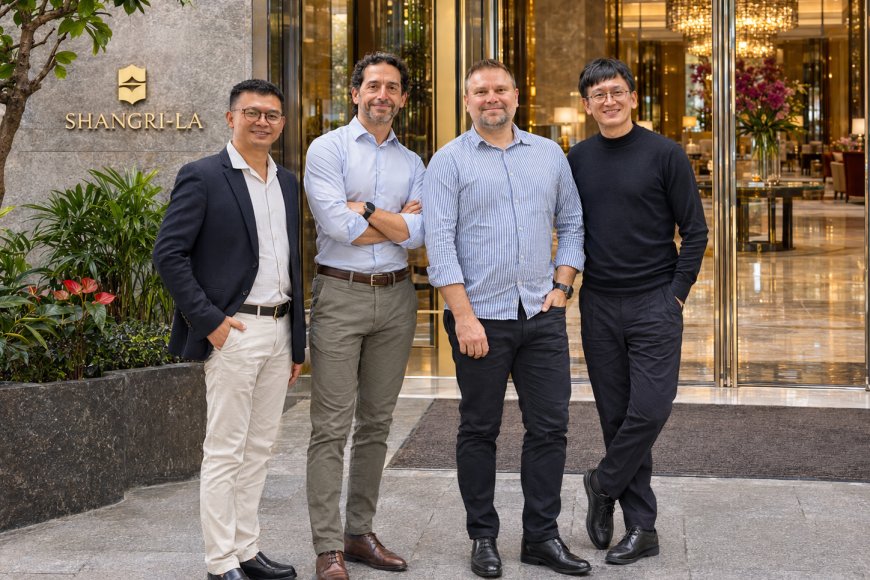
November 13, 2026 – BRNO / MANILA / GUIMARAS — Mendel University in Brno, Czech Republic, is expanding its long-standing academic engagement in the Philippines — moving from nearly a decade of partnership in the island province of Guimaras to new dialogue with universities in Metro Manila.
The expansion reflects a broader trend in EU–Philippines relations in 2026: education, research, green transition, and people-to-people exchange are becoming central pillars of the Enhanced Partnership between the European Union and the Philippines.
A Czech–Philippine partnership since 2018
Mendel University in Brno (Mendel-U) and Guimaras State University (GSU) — formerly Guimaras State College — signed a Memorandum of Understanding in 2018 to promote sustainable academic collaboration, faculty and student exchange, and joint research.
Since then, the partnership has operated as a continuous cycle of reciprocal visits. In 2026 alone, the exchange moved in both directions — a Mendel delegation held an Academic and Research Collaborative Visit at GSU in February, while GSU Dean Dr. Rhea Joy D. Flora and GSU President Dr. Lilian Diana B. Parreño traveled to Mendel University in Brno in September for research and academic engagement.
From Guimaras to Manila: Courtesy visit to University of Makati
On November 12, the Rector and Vice Rector of Mendel University in Brno paid a courtesy visit to the University of Makati (UMAK) in Metro Manila.
The visit was arranged by Atty. Jewel Bulos, Vice President of UMAK, and initiated by Noubikko Ulanday, CEO of RPConnect, to explore possible future collaboration between Mendel University and UMAK.
The meeting served as an introductory dialogue on potential cooperation in academic exchange, joint research, faculty and student mobility, and internationalization. No formal agreement was signed during the courtesy visit.
For Mendel, the Manila visit builds on its proven model in Guimaras — research-driven, community-grounded, and mutually beneficial exchange. For UMAK, it opens a potential new European partner at a moment when the university is raising its international profile as host of the 2026 WURI International Research Conference (WIRC-26) on November 18–20.
Why this matters for Europe
For European universities, the Philippines is no longer a peripheral partner. It is a young, English-proficient, rapidly growing country with strong demand for international education, research collaboration, and green and digital skills.
The Mendel–GSU–UMAK story illustrates what effective EU–Philippines academic cooperation looks like in practice:
1. Green transition, on the ground
Joint work in forestry, agroforestry, and sustainable tourism directly supports climate resilience, biodiversity, and sustainable land use — priorities shared by the EU Green Deal agenda and the Philippines’ own development goals.
2. Food systems and sustainability
Collaboration in food safety and food security contributes to more resilient local food systems — a core concern for both Europe and Southeast Asia.
3. People-to-people ties that outlast projects
Unlike one-off conferences, the Mendel–GSU model is built on repeated mobility: students and faculty who actually live, teach, and research in each other’s countries. Those relationships become the foundation for future Erasmus+ mobility, joint degrees, and EU-funded research.
4. A model beyond capital cities
The partnership proves that meaningful EU–Southeast Asia cooperation does not have to start in Manila. It can start in a provincial island university — and then scale to the capital.
What it means for the Philippines
For Filipino students and faculty, partnerships like this deliver:
- International exposure without the cost of a full degree abroad
- Research skills developed through real fieldwork, not only classroom theory
- Access to European academic networks, including potential pathways to Erasmus+, scholarships, and postgraduate study in Europe
- Graduates prepared for a global workforce — able to work across cultures, present research internationally, and contribute to sustainable development
For local communities in Guimaras, the benefit is equally concrete: research that informs better farming, forestry, tourism, and food practices — and students who return with skills they can apply at home.
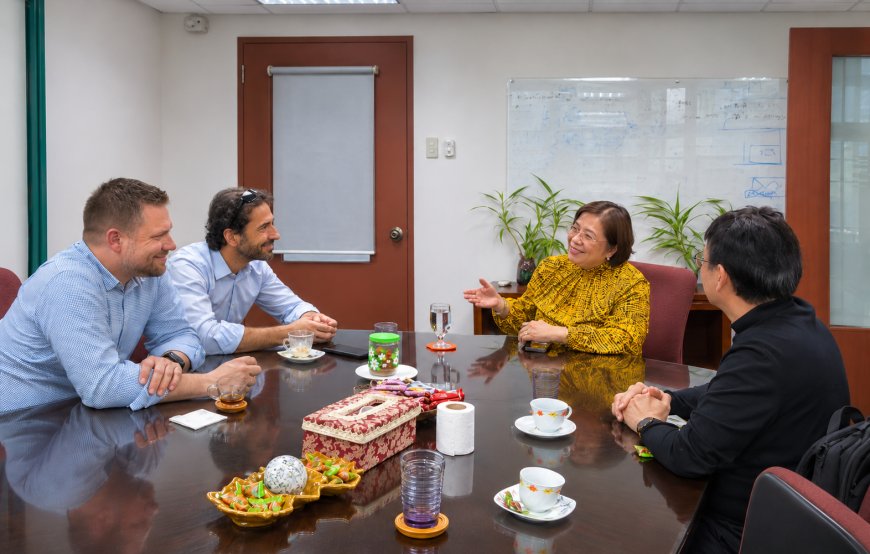 Discussing possible exchange and bilateral programs. (from left to right) Martin Klimanek, Rector of the Mendel University in Brno; Petr Kupec, Vice-Rector for Strategy and Sustainability of Mendel University in Brno; Atty. Jewel Bulos, VP – Administration, University of Makati; Noubikko Ulanday, CEO of RPConnect
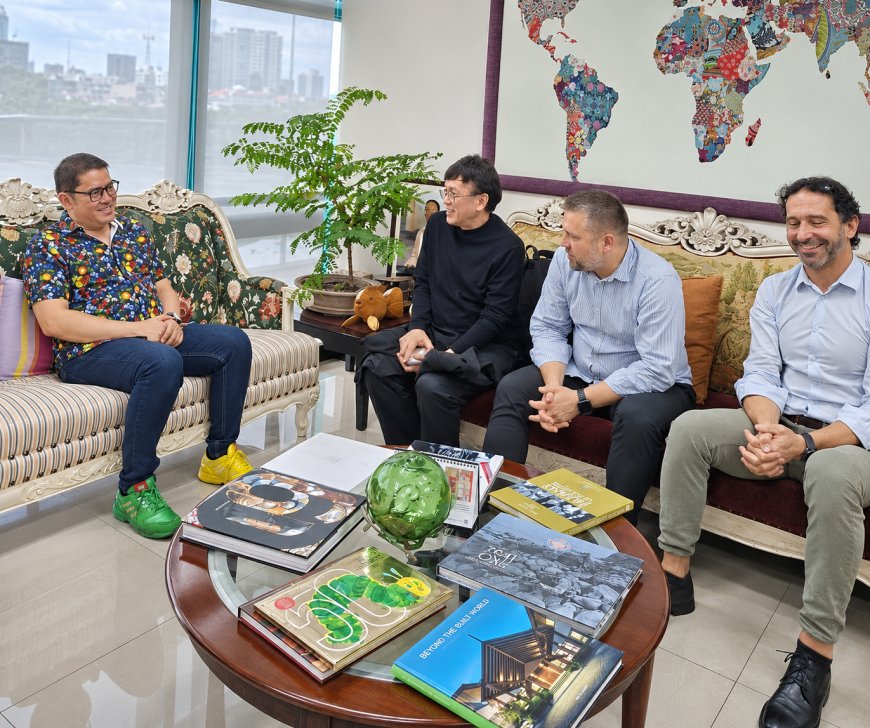
Exchanging Ideas for possible Bilateral Programs.(from left to right) Prof. Elyxzur C. Ramos, President of the University of Makati; Martin Klimanek, Rector of the Mendel University in Brno; Petr Kupec, Vice-Rector for Strategy and Sustainability of Mendel University in Brno; Noubikko Ulanday, CEO of RPConnect
Looking ahead
Both sides say the goal is not a single visit or a single agreement, but a sustained pipeline of exchange:
- Continued Mendel–GSU research training and mobility
- Exploration of a future Mendel–UMAK collaboration
- Deeper links between Czech, European, and Philippine universities in forestry, agriculture, tourism, sustainability, and innovation
As the EU and the Philippines deepen their Enhanced Partnership, university partnerships like this one are becoming one of the most durable forms of diplomacy — built not on declarations, but on students, researchers, and communities working together.
About Mendel University in Brno
Mendel University in Brno is a public university in Brno, Czech Republic, with a tradition of excellence in teaching and research since 1919. It is named after J.G. Mendel, the founder of modern genetics.
About Guimaras State University
Guimaras State University is a public higher education institution in Buenavista, Guimaras, Philippines, committed to accessible, quality education, research, and community service.
About University of Makati
The University of Makati is a public university in Makati City, Metro Manila, Philippines, known for its strong programs in business, engineering, technology, and the arts, and for its growing international engagement.










Leave a comment