






In an information environment increasingly shaped by artificial intelligence, algorithms and coordinated influence campaigns, simply knowing how to spot “fake news” is no longer enough.
PLDT and Smart Communications are calling for stronger critical thinking and media literacy as Filipinos confront a more complex form of disinformation – one that can use real facts out of context, exploit emotions and biases, and harness technology to amplify misleading narratives at scale.
At the latest PEG-Usapan Natin Session — an award-winning learning platform of PLDT and Smart for employees and stakeholders — journalists, researchers, and public sector experts discussed how Filipinos can better navigate an increasingly complex digital environment where misinformation extends far beyond traditional “fake news.”
Opening the forum, Gian Lao, Deputy Head of the Public Engagement Group, noted how algorithms and other personalization technologies are increasingly influencing the information people encounter online, underscoring the need for continued conversations on digital literacy and responsible information consumption. “One forum will not solve everything, but having these every so often—with experienced people like our speakers—will remind us of the behaviors, and the self-awareness, necessary to protect ourselves, our loved ones, and our network.”
Camille Diola, Chief Editor of Philstar.com and Interaksyon, said the challenge today is no longer simply determining whether content is fake or real.
“The better questions are: Where did this come from? What evidence supports it? What is missing? Is the context intact? And how certain can we actually be?” Diola said. “Those are the same questions journalists ask every day.”
She noted that the rise of AI-generated content, decontextualized information, and coordinated amplification campaigns has made verification more important than ever.
For JM Lanuza, assistant professor of political science at UP Manila and head of research at the Sigla Research Center, disinformation thrives because it is designed to exploit human behavior.
“Everyone is vulnerable,” Lanuza said. “Influence operations are effective because they tap into fears, aspirations, frustrations, and emotions. One solution is not just correcting information after the fact but helping people recognize manipulation before it happens.”
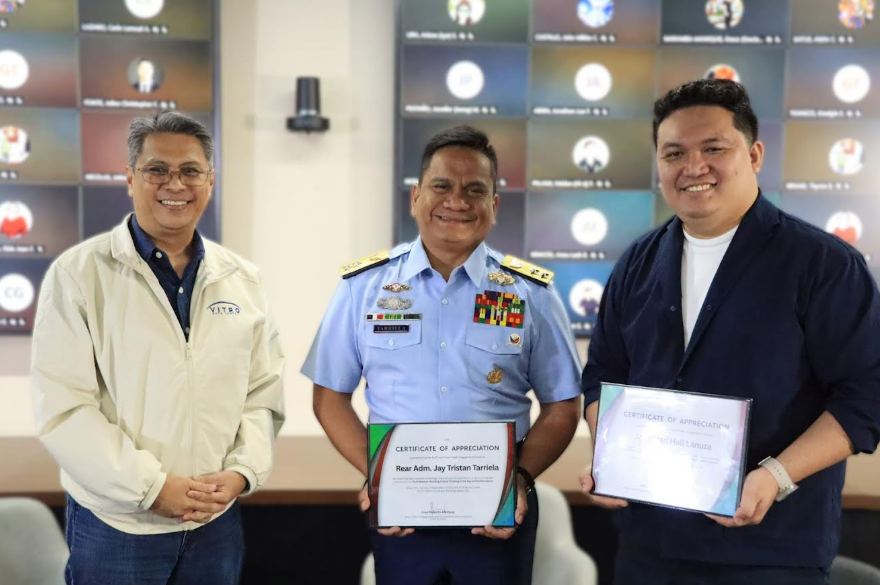
Rear Admiral Jay Tarriela, spokesperson of the Philippine Coast Guard for the West Philippine Sea, underscored the role of transparency in countering misleading narratives. “When we talk about the West Philippine Sea, it concerns every one of us because the information space is also being used to counter our own position. Our greatest challenge is disinformation, because it confuses people, erodes trust, and divides communities,” Tarriela said. “Transparency allows people to see facts for themselves and make informed judgments.”
The discussion highlighted how critical thinking, media literacy, and responsible engagement are becoming essential skills in an era defined by information abundance and rapidly evolving digital technologies. Speakers agreed that building resilience against disinformation requires a shared effort among individuals, institutions, educators, media organizations, and technology platforms.
Through initiatives such as PEG-Usapan Natin Sessions, PLDT and Smart continue to support conversations that encourage Filipinos to become more discerning consumers of information and more responsible participants in the digital space.
Smart also urges customers who receive text scams and other SMShing messages to report these incidents to its anti-scam platform at https://smart.com.ph/huliscam. Other than the HuliScam portal, customers may also report cyber threats to Smart’s verified and official social media pages – Smart Communications on Facebook and @SmartCares on X — or call hotline *888.





Leave a comment