




‘This is not 1945’: General Assembly president gavels open new session aimed at restoring global trust
The UN General Assembly gavelled open its 81st session on Tuesday at UN Headquarters as the incoming president pledged to restore public trust in the institution during a time of war, humanitarian crises and intensifying climate change.
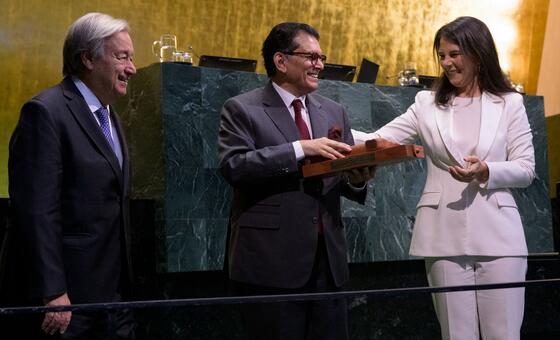
After officially receiving the iconic Icelandic wooden gavel from outgoing Assembly president Annalesa Baerbock, Khalilur Rahman of Bangladesh outlined a key theme for the year: Restoring trust, managing transformation: A United Nations that delivers for all.
“We must make the United Nations fit for the future,” he said, underlining the importance of hearing voices from civil society. “We have a situation where trust is in deficit. This is not 1945. This is the 81st session. The world has moved on. The Organization must move on, and I’ll help that process.”
Here’s a snapshot of Mr. Rahman’s priorities:
- Silence the guns, amplify the voices: Peace, security and justice for all
- No one left behind, no country left out: Sustainable development through accelerating the 2030 Sustainable Development Goals (SDGs)
- Our planet, our pact: Climate resilience and environmental sustainability
- Rights and protection: Human rights, humanitarian action, protecting refugees and migrants
- Innovation with inclusion: Digital governance, artificial intelligence and safeguarding the next generation
-
We the peoples, reimagined: Renewed multilateralism, UN reform and inclusive global governance
UN Photo/Manuel Elías Secretary-General António Guterres delivers remarks at the closing of the 80th session of the UN General Assembly.
Heart of global problem solving
UN Secretary-General António Guterres saluted the accomplishments of the outgoing president Annalesa Baerbock and welcomed Mr. Rahman’s new tenure – which begins amid conflicts, geopolitical divisions, a risk of nuclear escalation, persistent poverty, inequality and worsening climate chaos, he argued.
Another immediate priority is selecting the next UN chief, to begin their term in January 2027.
“Rebuilding trust in the multilateral system is the defining challenge of our time,” the UN chief said. “In these tumultuous times, the global problem-solving system is more crucial than ever.”
However, from the UN Security Council to world finance, the institutions of the multilateral system are straining to meet the moment, Mr. Guterres said.
A better future
“International law and human rights – the core of our Organization – are too often flouted with impunity, and geopolitical mistrust and suspicion continue to block the effective solutions we need and erode people’s faith in the possibilities of global cooperation,” he said.
“But, as I join you in this opening of a General Assembly session for the last time as Secretary-General, I have enormous hope thanks to the work that happens here.”
From the start, the UN has been the place where the world’s toughest and most consequential problems are confronted head-on, he said.
“Through diplomacy, dialogue and collaboration, this Assembly can rebuild the trust and good faith that is missing from our geopolitics today and ensure the people of the world inherit a better, healthier and more peaceful future.”
UN is a ‘necessity’
At the final meeting of the Assembly’s 80th session, outgoing president Baerbock told ambassadors she was “convinced more than ever of the importance and necessity of our United Nations”.
In spite of its shortcomings, not a single day, not a single country, would be better off without the UN
To those out there who argue that the UN is irrelevant or failing, especially in these new geopolitical realities, she asked Member States to consider the alternative – a world without the UN.
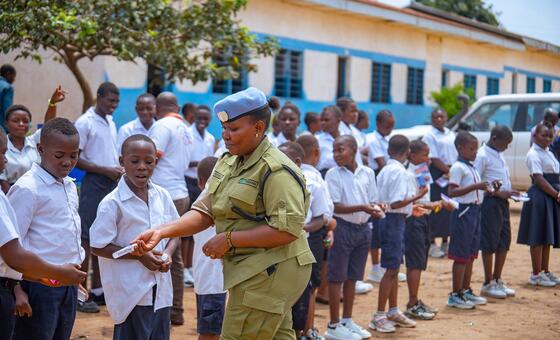
She pointed to millions of children who would not be in school without the UN Children’s Fund (UNICEF) and women who only dare to walk out of their homes without fear of being raped because UN peacekeepers are deployed close by.
“Our challenge though is that in a world where hate gets six times more clicks, these positive examples can easily go unnoticed,” she said.
“Make no mistake, in spite of its shortcomings, not a single day, not a single country, would be better off without the UN.”
A long-time diplomat, Khalilur Rahman left his position as the Foreign Minister of Bangladesh to take up his new duties leading the General Assembly.
Having previously served as National Security Adviser and High Representative for the Rohingya Issue in the Interim Government of Bangladesh, he has also held senior positions with the UN and was a founding member of the East West University in Dhaka.
Watch Mr. Rahman’s press stakeout at UN Headquarters outlining his priorities here:





Leave a comment