






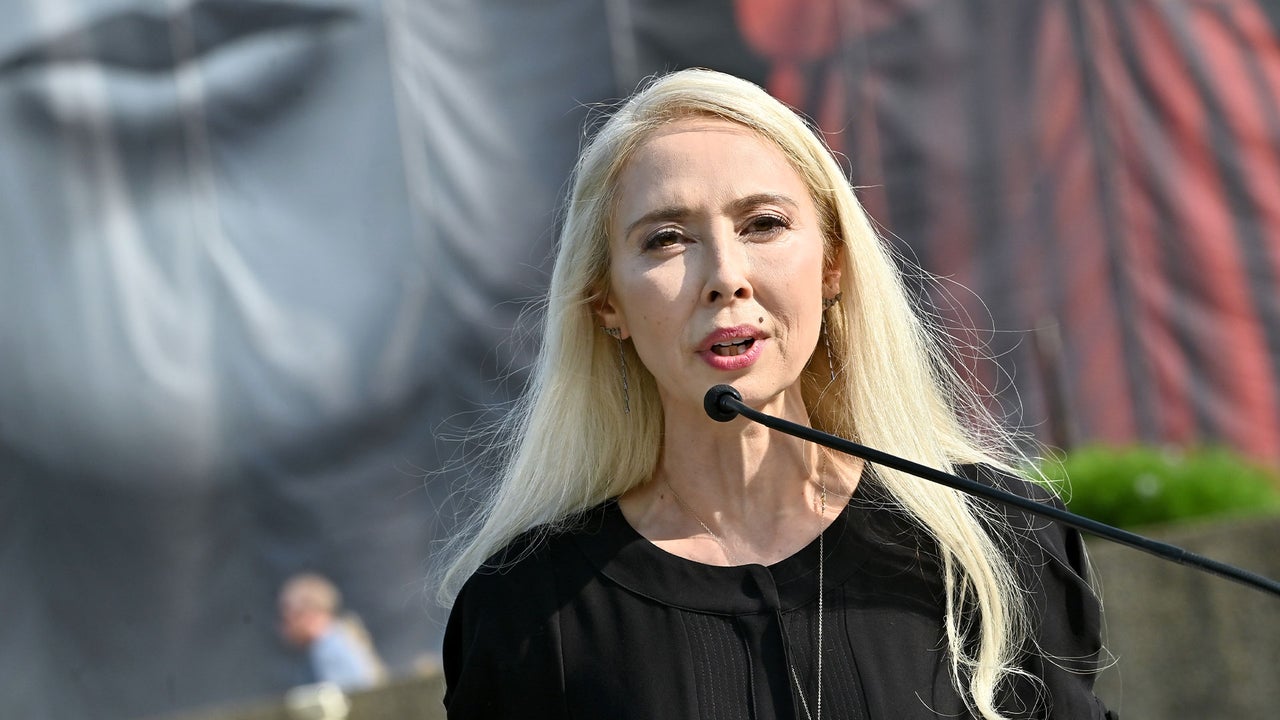
Melissa Chiu, longtime director of the Smithsonian’s Hirshhorn Museum and Sculpture Garden, announced in April that she would be leaving for a new role as director of New York’s Solomon R. Guggenheim Museum.
As Chiu concludes her successful tenure at the Hirshhorn, one of 19 Smithsonian museums, the Trump administration has continued to target the Smithsonian Institution in an effort to “remove improper ideology” from all aspects of the organization, accusing it of political bias.
The federal government recently proposed cutting the institution’s funding by 11% to its lowest prospective funding level since 2020, as Artforum reported.
However, this climate for cultural organizations did not deter Chiu from advocating for the Hirshhorn, which she’s done since her start in 2014.
Under Chiu’s leadership, attendance tripled, fundraising increased, the museum’s permanent collections expanded, and the groundwork for the Sculpture Garden revitalization, reimagined by the architect and photographer Hiroshi Sugimoto, was laid.
Fast Company recently spoke with Chiu about why working at the Guggenheim is her dream job, reflections on her decade-plus at the Hirshhorn, and the important role that museums play to the public.
Chiu begins her new job at the Guggenheim on Tuesday, September 1.
This interview was edited for length and clarity.
In an interview with The New York Times, you said working as director at the Guggenheim is a “dream job” that you would have taken under any circumstances. Would you expand on why and what you look forward to most in this position?
It’s a museum with extraordinary architecture by Frank Lloyd Wright. I always think of museums and buildings as much as their collection and the art they show. When you have both of them together to speak to the moment that they were created, I think allows for a pretty unique experience of being in the museum and having that encounter with art.
So I’m most excited about that. The Guggenheim has such an extraordinary record of just groundbreaking exhibitions, an amazing collection. We know a lot about the comprehensive [Wassily] Kandinsky collection, and I’m looking forward to discovering even more.
I would love to hear your reflections on what you’re leaving. What part of the Sculpture Garden renovation have you been most excited for, and how does it feel to have that be one of the last major changes that you made before your departure?
Looking back on it, it was a very important decision that we made to commission an artist in Hiroshi Sugimoto to reenvision what a twenty-first century sculpture garden could be. As an artist, he intuitively knows the kinds of spaces that artists would like to create work for.
[Sugimoto] just had both an attentiveness to creating spaces for that encounter with work while also thinking very carefully about the materials that he used.
There’s a lot of stone from local quarries across America. A lot of attention was paid to the trees that are obviously more suited to the climate—and also provide a lot of shade and respite from the heat of D.C. when it’s at the height of summer.
I would love to hear more about your strategy or your approach to communicating with new artists. You’re coming from D.C. and you’ll be in New York City and communicating with artists who are in a new space and in a new environment.
One of the characteristics of being in D.C. is that it is really a place of national institutions. The Smithsonian is the largest museum complex in the world and the Hirshhorn is a part of that, as it faces the National Mall, where there are 35 million visitors from around the country and around the world every year.
So we sit within a museum ecology that often receives visitors who may well have never been to a modern art museum before, and so we tried to think carefully about that as we programmed—whether it was the talks that we did or the video guide that we created for them.
Now if I think to what it will mean to be in a New York institution, in some ways it’s a higher-density audience that is, interestingly enough, more local or more city based. It’s also an audience that, generally speaking, visits many modern contemporary art museums. It’s not their first encounter.
So I think, with that, it allows you to think differently about the kinds of exhibitions that you do and possibly also the kinds of artists who you work with, knowing that there is a large population of artists living in New York City who you can draw on.
You were [at the Hirshhorn] for about 12 years. What are the highlights or what are you most proud of during your time there?
I think that probably the most visible change for the museum came when we did the [Yayoi] Kusama show, which was nearly 10 years ago. It’s hard to imagine, but it was nearly 10 years ago that we actually staged the first major exhibition, which was the appreciation of her infinity mirror rooms. [Note: Kusama passed away last week, after this interview took place.]
I think that really did trigger and give a great degree of momentum as we toured the exhibition nationally toward a better understanding of her practice. [The infinity mirror rooms] are now a whole phenomenon in and of themselves.
So I think that was a really important moment for the museum, because in some ways it was both—it was an art historical contribution, but it also allowed people to see that it became a phenomenon not just here in D.C. but everywhere that the show traveled.
What are you looking forward to in the future as we see technology and the way people interact with art online and in person change? What are you anticipating?
Well, I’m struck by one of the things that we often say about our education center. Our mantra there is, “Think like an artist.” So, what does that mean? What museums can bring is to develop a sense of what creativity is, how creativity is expressed, and how it can be a part of your life.
While we talk a lot about screen culture and AI, creativity is still that one thing that is a very human thing to do. While in a museum, you are experiencing a whole spectrum of creative acts through different media.
We do think of museums as important convening spaces because of that, and if I think of a skillset in particular, yes, it’s creativity, but it’s also visual acuity. If you are able to develop the skills to be able to see things in different ways, it gives you the ability to attune different things around you in different ways.
Is there anything else that you would like to share with people about your next steps?
To make art is such an extraordinary act, and I think that museums become that place where people can see what is usually a private experience in an artist’s studio. It’s the public version of it. I really do feel strongly that museums are that convening place.





Leave a comment