






As wars spread, the global food system unravels
Carl Skau, the acting head of the World Food Program, met the family during a visit to Somalia last week. Speaking at a United Nations Security Council debate on conflict and hunger on Tuesday, he described their ordeal as one example of a broader phenomenon unfolding across war zones: the “vicious conflict-hunger cycle,” in which war produces hunger and hunger, in turn, creates conditions for further violence.
In Somalia, farmers are driven from their land. In Sudan, markets have been struck by drones and missiles. In Haiti, gang violence has isolated entire communities. From Gaza to Mali and Myanmar, humanitarian workers have been prevented from reaching people in need.
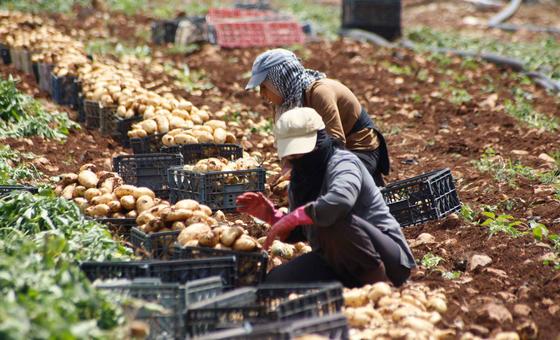
Taken together, the crises point to a dangerous evolution in the relationship between war and hunger. Food systems themselves – farms, ports, markets, storage facilities and shipping routes – are increasingly caught in conflicts whose economic consequences extend far beyond the battlefield.
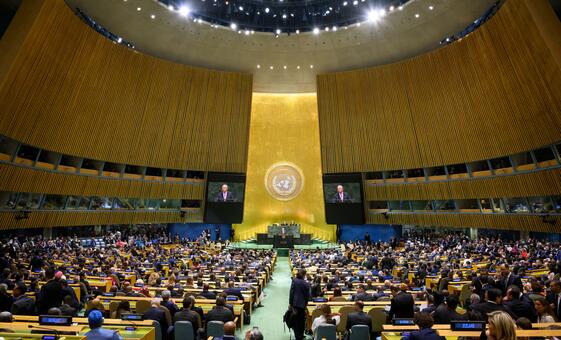
“Critical food systems – and the lives and livelihoods they sustain – are under attack,” UN Secretary-General António Guterres told the Council at the opening of the debate.
At least 266 million people faced acute food insecurity last year, Mr. Guterres said, as the world recorded its highest number of armed conflicts since World War II. For the first time this century, famine was confirmed simultaneously in two places, Sudan and Gaza. Conflict and violence are now the primary drivers of hunger in 12 of the 13 hunger hot spots considered of greatest concern by the United Nations.
A battlefield stretching across oceans
But the geography of hunger is changing. Increasingly, a missile strike on a port or an attack on a cargo ship can raise the price of food thousands of miles away.
The Black Sea is one example. Russia and Ukraine are major grain exporters, and escalating attacks have disrupted a crucial artery of the global food trade. Grain shipments through the Bosporus are down 40 per cent from a year earlier, according to WFP.
At the same time, attacks on commercial vessels have disrupted trade through the Red Sea. And the Strait of Hormuz, which carries roughly one-fifth of global oil supplies and one-third of fertilizer trade, has been affected by restrictions and closures that have pushed commodity prices higher.
Mr. Skau described the convergence as a crisis of three maritime choke points: the Black Sea, the Red Sea and the Strait of Hormuz. Disruptions there travel through interconnected energy, fertilizer and food markets, turning distant wars into higher costs for countries that depend heavily on imports.
For wealthy countries, that may mean higher prices. For countries already on the edge, it can mean fewer meals.
In Sudan, Mr. Skau said, basic food costs have risen almost 40 per cent since February. Higher fuel prices ripple through irrigation, transportation and milling, while disruptions to fertilizer exports threaten planting seasons across Africa and Asia – meaning that the full consequences of today’s conflicts may not become visible until future harvests.
When hunger feeds the next war
Conflict destroys farms, markets and supply routes, driving people from their homes. But hunger can also leave displaced and impoverished communities more vulnerable to recruitment by armed groups and criminal networks.
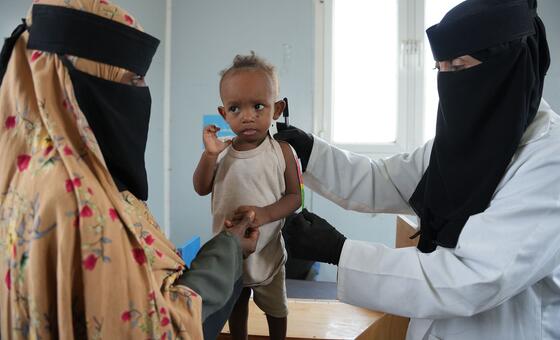
Somalia offers a particularly grim illustration. Mr. Skau said six million people – about a third of the population – face acute hunger or worse, while nearly two million children suffer from acute or severe malnutrition. Yet the WFP is assisting roughly 600,000 people, about one in 10 of those facing acute hunger.
Last week, fighting in Baidoa prevented the agency from reaching about 5,000 children with nutritional assistance. And when families can no longer put food on the table, Mr. Skau warned, desperation can create opportunities for armed groups and criminal networks to recruit vulnerable young people.
It is the cycle the Security Council formally recognized in 2018, when it unanimously adopted Resolution 2417 on conflict and hunger. Eight years later, Mr. Guterres said, “the vicious cycle rolls on.”
The warning comes before the famine
Failure is not primarily one of diagnosis. The international community has developed systems for detecting hunger and predicting famine. The problem is what happens after the warning.
Somalia’s 2010-12 famine killed nearly 260,000 people, roughly half of them children, Mr. Skau said. Later crises, in 2017 and 2022, did not reach the same catastrophic scale in part because assistance was increased before famine took hold. Sudan, he argued, offers the opposite lesson. The warning signs were visible, but the international community failed to act decisively.
Mr. Guterres urged the Council to protect farms, water systems, markets, storage facilities, ports and supply routes, and above all to respond before hunger crosses the formal threshold into catastrophe.
“We cannot wait for famine or catastrophic conditions to be formally confirmed,” said the UN chief. “I call on this Council to act when the warning lights are flashing.”
That warning comes as the machinery designed to prevent starvation is itself shrinking. Humanitarian agencies are confronting more wars, more displaced people and more disrupted trade routes with fewer resources. In Somalia, Mr. Skau said, the WFP is reaching only a fraction of those it once could.
The result is a disturbing inversion. The world has become better at predicting where people will starve, even as it becomes less capable – or less willing – to prevent them from doing so.









Leave a comment