






Attacks ‘getting worse’: Deadly Russian strikes hit Ukrainian cities
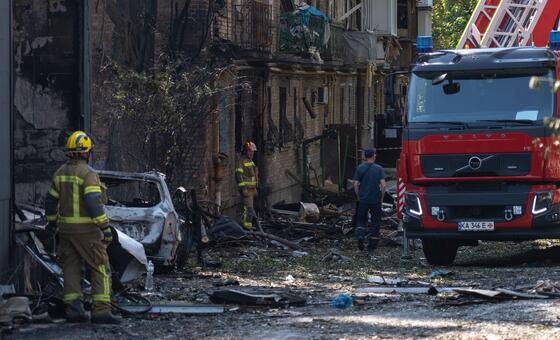
Aid workers and first responders raced to help people across Ukraine after a wave of deadly Russian missile and drone strikes overnight as concerns mounted over military activity near nuclear power plants on Thursday.
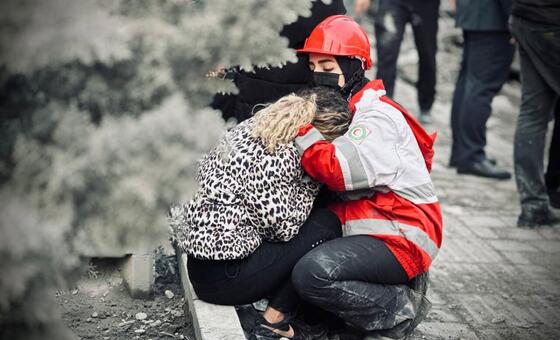
Reports from the ground point to widespread damage to homes and civilian buildings, with search and rescue teams moving quickly to reach destroyed structures. The strikes killed at least a dozen people and injured more than 100.
“The attacks were getting worse,” said Kyiv resident Maryna, who sought shelter with her children overnight in a metro station with many others after warnings of another attack.
“I want to be in my own bed, with my own toys,” her six-year-old daughter, Milana, said.
Condemning the strikes, UN Secretary-General António Guterres called for de-escalation and a ceasefire.
“Any attacks against civilians and civilian infrastructure, wherever they occur, are a clear violation of international humanitarian law and must stop immediately,” UN Deputy Spokesperson Farhan Haq said.
Here’s the latest from UN agencies on the ground:
- Increased military activity near the Zaporizhzhia Nuclear Power Plant further challenges efforts to maintain nuclear safety and security at the site, Director General Rafael Mariano Grossi of the International Atomic Energy Agency (IAEA) said in its latest situation update
- At least three children were killed in Radushne, Kryvyi Rih and at least seven children injured in Lviv, Kherson region and Kyiv region, the UN Children’s Fund (UNICEF) reported, adding that “more young lives [are] devastated by war as deadly attacks persist”
- “Once again, families in the Dnipro region, Lviv and Kyiv have lost loved ones or been left without homes,” the UN emergency relief agency, OCHA, said in a social media post
-
“Following today’s large-scale Russian attack across Ukraine, residential buildings and other facilities in Lviv were damaged, resulting in civilian casualties,” according to a social media post by the UN refugee agency, UNHCR
Emergency response
Efforts are already underway to help residents, UN agencies said.
As search and rescue efforts continue, the UN agency and partners are on the ground, providing emergency assistance to affected families, UNHCR said.
In a frontline village in the Dnipropetrovsk region, the UN office in Ukraine’s inter-agency convoy delivered 240 solar lamps to support residents and provided information leaflets to help people access guidance on available assistance and evacuation procedures.
In the aftermath of the attacks, UNICEF were on the ground providing urgent support like psychological first aid, case management and cash assistance registration to affected children and families.
What’s the UN doing?
From emergency response to de-mining and debris removal, the newly released UN annual report shows initiatives reaching millions of Ukrainians since Russia’s full-scale invasion in 2022.
Here are some highlights of the UN’s work in 2025:
- Keeping electricity and heating services running for 6.6 million people
- Strengthening water systems serving over 16 million people
- Clearing 600,000 tonnes of debris, enabling reconstruction
- Helping 732,000 people access social protection
- Supporting learning for over 811,700 students
- De-mining Surveying 1.6 million hectares of farmland
- Releasing over 7,600 hectares of mine‑suspected land and teaching 1.3 million children how to stay safe from explosive ordnance








Leave a comment