



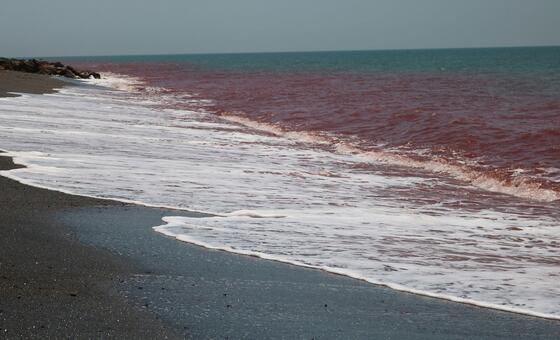
Stranded seafarers remain trapped as Hormuz shipping stalls
Addressing the UN Security Council on Thursday, UN Secretary-General António Guterres lamented the escalation of strikes and counterstrikes by the United States and Iran this month, warning of “devastating consequences in the region and across the globe” if there is no reversal.
“The situation is getting out of control. It is teetering on the edge of [the] unimaginable,” he told a meeting on dispute resolution.
“One crisis feeds another. One escalation triggers the next. As this dynamic spreads, the political objectives are becoming increasingly obscured by the confrontation itself. It is time to step back.”
In brief:
- Hormuz shipping remains almost completely halted.
- 6,000 seafarers remain stranded aboard 500 ships.
- Tolls for safe passage illegal under international law.
- Higher energy prices lift global trade values.
In an update, the UN International Maritime Organization – IMO – has told UN News that “very few ships, if any” are actually sailing across the narrow waterway, following renewed attacks on vessels since hostilities resumed on 12-13 July.
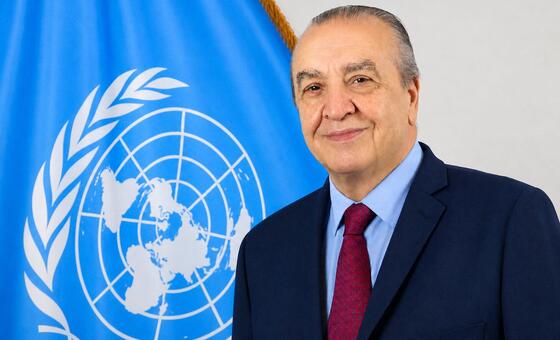
IMO Secretary-General Arsenio Dominguez expressed deep concern for the 6,000 seafarers still trapped on around 500 ships moored in the Persian Gulf behind the strait.
“We need to remember that these are innocent people who are trained to do the work, that they are not trained for combat, and the vessels are not prepared to defend themselves against missiles and drones,” he said.
Seafarers play a crucial role in global trade all around the world and without them, “shipping will not operate”, the IMO chief insisted. “Without them, 90 per cent of goods that are transported by ships will not be able to reach their final destinations and all of us are going to be impacted.”
Mr. Dominguez also warned that shipping has been “taken to the limit” in recent years, citing disruption in the Black Sea caused by Russia’s full-scale attack on Ukraine and uncertainty in the Red Sea, where Houthi separatists in Yemen have said they attacked two Saudi oil tankers and closed Bab al-Mandab Strait, effectively barring shipping to and from the Suez Canal.
“We’ve been taken to the limit,” he insisted. “Because one thing that we cannot replace is those essential cargoes and essential goods that either come from the regions where the conflicts are taking place or that are required for the communities in the countries that are at war.”
Global energy lifeline
In peace time, the Strait of Hormuz transports an estimated 20 per cent of the world’s oil and gas supplies from the Gulf region. IMO’s Mr. Dominguez stressed that shipping should not attempt to cross the narrow waterway until the conflict has been resolved.
“Very little progress has been made in any future management of the strait, because the reality is that we need de-escalation in order to continue negotiations,” he said.
Seafarers’ safety is top priority
The UN agency’s first priority remains securing the evacuation of all seafarers trapped in the strait since the war first erupted on 28 February, when Israel and the US began bombing Iran.
Once all mariners are safe, “we need to start getting the guarantees that the region is de-mined, that the strait is safe for ships to transit, and then step by step, start resuming the operations and make sure that we go back to the levels of around 135 vessels in transit per day. That’s how the Strait was operating,” Mr. Dominguez stressed.
“Once we have those guarantees, we of course then will continue that engagement in looking into what will be the future management of the Strait of Hormuz, all in accordance with international law,” he added.
Talks ongoing
Asked about the likelihood of securing such guarantees, the IMO Secretary-General noted that some “steps” had been taken by both parties who are “talking after many years of not engaging”.
In addition, the Memorandum of Understanding signed by Iran and the US last month to end the war remains in place and “serves as the basis for future negotiations [and] further clarifications” regarding the 14-point plan, Mr. Dominguez continued.
Without naming them, the IMO chief also said that many other countries were currently engaged in bilateral negotiations, alongside the UN’s wider efforts to end the war.
“Hopefully that would allow us to bring the situation back to where it was a couple of weeks ago and continue to make progress,” Mr. Dominguez said.
Freedom of the seas
He noted that there is “no mechanism within international law” that allows countries to charge merchant ships wishing to cross the Strait and instead cited a 2007 agreement governing the Straits of Malacca and Singapore as a successful alternative. “There’s no imposition of charges. It’s not a mechanism that introduces any charges or fees. And that is something that has to be very clear.”
Civilians are not a target
In related news, independent human rights experts on Thursday condemned the resumption of hostilities between the US and Iran which has impacted Gulf States and left civilians in mortal danger.
In a joint message, the 10 independent experts who are appointed by the Human Rights Council highlighted reports of strikes on civilian infrastructure in Iran, including ports in the south of the country and power outages in the southern city of Chabahar.
“Projectiles” also landed near Iran’s Bushehr nuclear power plant and damage has been reported to railway lines, including the Agh Tekkeh Khan bridge, while a desalination plant was also struck, reportedly leaving 10,000 people without water, they said.
“Local authorities and Iranian media have also reported strikes on Semnan Airport, a wheat silo, a bottled water factory and areas adjacent to a children’s cancer hospital in Ahvaz, forcing the evacuation of patients,” the experts said.
Fifty people have been killed and more than 500 injured since the resumption of hostilities, according to the Iranian authorities.
“Those losing their lives include fishermen, night-shift workers caught in the strikes and residents of informal settlements – people already living on the margins and long deprived of basic services,” they said, underscoring how Iran’s people “are once again caught between renewed US strikes and their government’s internal repression”.
Independent experts are not UN staff nor are they paid for their work.
Global trade surge linked to Hormuz crunch
In economic news, meanwhile, the latest snapshot of international trade indicates that the war has contributed to goods sales of $13.7 trillion in the first half of 2026, up 12.5 per cent from the same period in 2025.
Higher energy prices – and not greater volumes – directly linked to the US-Iran war are behind the steep rise, according to the UN Trade and Development agency, UNCTAD.
Combined with a 10.5 per cent increase in services traded over the same period, the agency said that around $2 trillion has been added to the overall value of global commerce, putting it on course for record returns by the end of the year.





Leave a comment