




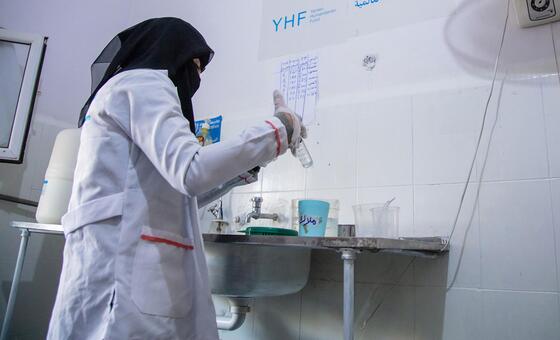
Health response brings lifesaving care closer to thousands in Yemen
The support, implemented by the World Health Organization (WHO), has expanded access to emergency surgery, maternal and child health services, outbreak response and treatment for chronic diseases in four hard-to-reach districts where years of conflict have left health systems severely weakened.
More than 42,000 people, including internally displaced families, women, children and people living with chronic illnesses, have benefited from the year-long initiative in Abyan, Al Bayda, Al Husha and Far’ Al Udayn.
Emergency response
For people injured by conflict or accidents, access to emergency surgery can determine whether they live or die.
Between August 2025 and February 2026, WHO-supported surgical teams carried out 864 operations at hospitals in Al Bayda, Far’ Al Udayn and Lawdar, nearly double the original target of 462 procedures.
The programme also supplied hospitals with essential medicines and trauma equipment, helping frontline health workers continue treating patients despite limited resources.
Yemen also continues to battle recurring outbreaks of cholera, measles and other infectious diseases, placing already vulnerable communities at greater risk.
With OCHA funding, WHO equipped health facilities with emergency medicines, oral rehydration salts, intravenous fluids and rapid response kits.
Health teams carried out 207 field missions to investigate suspected outbreaks, trace contacts and contain the spread of disease, exceeding the project’s original target and helping reduce the risk of wider outbreaks.
Providing support
The programme also helped sustain maternal and child health services at two hospitals serving vulnerable populations.
During the reporting period, health workers provided more than 14,000 obstetric and gynaecological consultations, over 4,600 antenatal visits and more than 12,000 paediatric consultations.
They also supported nearly 2,700 deliveries, including Caesarean sections.
No maternal deaths were recorded at the supported facilities during the reporting period, helping ensure safer pregnancies and healthier starts for newborns.
The initiative also ensured continuity of care for people living with diabetes, hypertension and cardiovascular disease by supplying essential medicines to four health facilities.
More than 5,200 patients received treatment, helping prevent interruptions in care that can lead to serious complications or death.
Continued support needed
Dr. Syed Jaffar Hussain, WHO Representative in Yemen, said OCHA’s support through the Yemen Humanitarian Fund has been instrumental in ensuring vulnerable communities can continue accessing lifesaving health services despite the country’s ongoing humanitarian crisis.
“Through this partnership, WHO has been able to strengthen emergency and trauma care, support outbreak response, sustain maternal and child health services and ensure continuity of care for people living with chronic diseases” he said.
As humanitarian needs continue to grow across Yemen, sustained international support will be essential to ensure vulnerable communities can continue accessing the care they urgently need.







Leave a comment