





More than 500 people feared dead in double Myanmar shipwreck tragedy
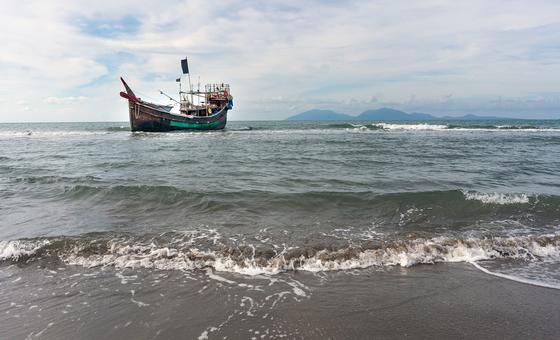
In a joint alert on Thursday, the UN migration agency, IOM, and UN refugee agency, UNHCR, said that both vessels had set sail from Myanmar’s Rakhine state in late June.
Why this matters
- Hundreds more ethnic Rohingya have likely drowned
- Funding cuts leave refugees in Bangladesh with fewer options
- Myanmar conflict encourages perilous sea journeys
Contact was lost with one boat carrying around 250 people shortly after it departed. A second boat, with 280 people on board, is believed to have sunk off Myanmar’s Ayeyarwady coast on 8 July.
The passengers were mostly ethnic Rohingya people from Rakhine state who have faced decades of persecution by the Myanmar authorities.
The boats used in such journeys are often ill-suited to the high seas and crammed well over capacity.
Some of those on board had also travelled from Cox’s Bazar refugee camp in neighbouring Bangladesh, which is home to around one million Rohingya, who fled State-led violence against them in 2017.
High seas
The UN agencies noted that the boats had set sail outside the regular sailing season when conditions are more hazardous.
“This is part of a worrying trend that’s been going on for some time now. Many people, hundreds of people have already reported to have lost their lives in that same region, in those same seas this year,” said UNHCR spokesperson Matthew Saltmarsh.
Before these latest tragedies, nearly 300 people had already been reported missing or drowned in the Andaman Sea and Bay of Bengal so far this year, including Rohingya refugees and Bangladeshi nationals.
Recent torrential rain and flooding across the region is believed to have increased the risks associated with making dangerous sea crossings, UNHCR said.
The agency’s Mr. Saltmarsh also noted that that the situation inside Cox’s Bazar is increasingly difficult for those staying there, because of serious funding cuts.
“These reports underscore the devastating impact of protracted conflict and displacement, as well as the continued lack of sustainable solutions for Rohingya communities,” IOM-UNHCR said in statement.
War’s repercussions
The agencies pointed to the worsening humanitarian situation in Myanmar where a civil war is ongoing, linked to a military coup in February 2021. The “limited assistance and opportunities” in refugee camps in Bangladesh have also contributed to convincing an increasing number of people to risk their lives on perilous sea journeys, in search of safety and protection.
A recent UN human rights office report highlighted how foreign parties continue to supply arms, parts, ammunition and munitions to Myanmar’s military, as well as jet fuel and other dual-use items.
The report warned that reductions and suspensions in foreign aid are threatening locally led civilian protection efforts aimed at saving lives and ensuring a minimum level of access to essential services despite continuous military attacks on civilians.
Assisting the most vulnerable
UNHCR and IOM support governments to coordinate search and rescue of vulnerable people on the move, reception, protection and durable solutions across the Asia-Pacific region.
This cooperation – through agreements including the Bali Process on People Smuggling, Trafficking in Persons and Related Transnational Crime – covers refugees, migrants and stateless people moving along key migration routes, including in South and SouthEast Asia. “This route-based approach aims to save lives, protect people and reduce harm, and support States in effectively managing mixed movements,” the agencies stressed.







Leave a comment