





What actually is parametricism? As part of our series on the style, we’ve written a quick and simple overview of the notoriously complex and contentious concept.
What exactly is it?
Parametricism is a 21st-century architectural style and theoretical movement closely associated with advances in digital design tools.
What does parametricism mean?
Parametricism is a style of architecture that results from using paramateric design tools to create a building.
The word parametric refers to parameters, which are used to define rules for digitally design tools.
Where did the term parametricism come from?
The term was coined in 2008 in a manifesto by the German architect Patrik Schumacher, now principal of Zaha Hadid Architects.
In his Parametricist Manifesto, presented at the 11th Venice Architecture Biennale, Schumacher proclaimed the movement would be international, becoming “the great new style after modernism”.

What are its key principles?
The principles of parametricism are based on the use of computer technology and parametric algorithms to generate complex, adaptive architectural forms.
When being developed, these forms are parametrically variable and mutually coordinated, meaning every element belongs to an elastic, integrated whole in which changing one parameter reshapes the others accordingly.
What does a parametricist building look like?
In a series of taboos and dogmas set out by Schumacher, he states parametricist buildings oppose rigid boxes, flat planes or repetitive grids.
According. to the architect, a parametricist building is non-rectilinear, with soft, organic, sweeping geometries akin to structures and systems found in nature.
Building elements that are usually distinct, such as roofs and walls, are often blended for a streamlined, amorphous look. Many people describe the parametricist aesthetic as sci-fi or futuristic, as buildings of this style can lack an obvious connection to their surroundings.
What is the difference between parametricism and parametric design?
Parametricism is an architectural style and theoretical movement, and parametric design is an algorithm-based toolkit.
While parametricism relies heavily on parametric design tools, they can be used to create a building in any style.
Parametric design can be used to create entire structures, as seen in parametricism, or to find the optimal solution for a specific element of a building, such as the roof dome at the Louvre Abu Dhabi by Jean Nouvel.
Popular parametric design tools include the software Grasshopper, which is a plugin for Rhino, and Dynamo for Revit.
What are some famous examples of parametricist architecture?
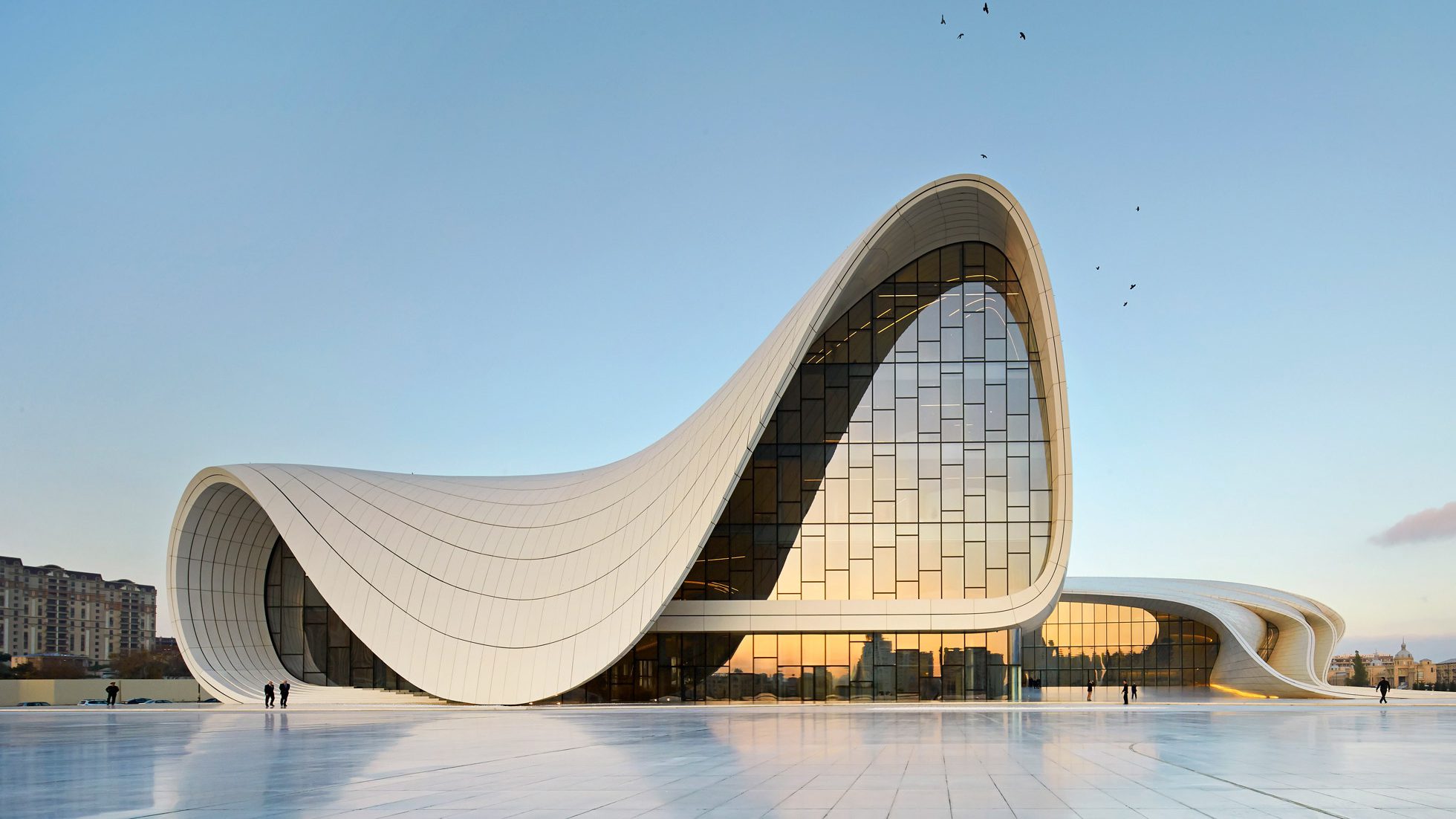
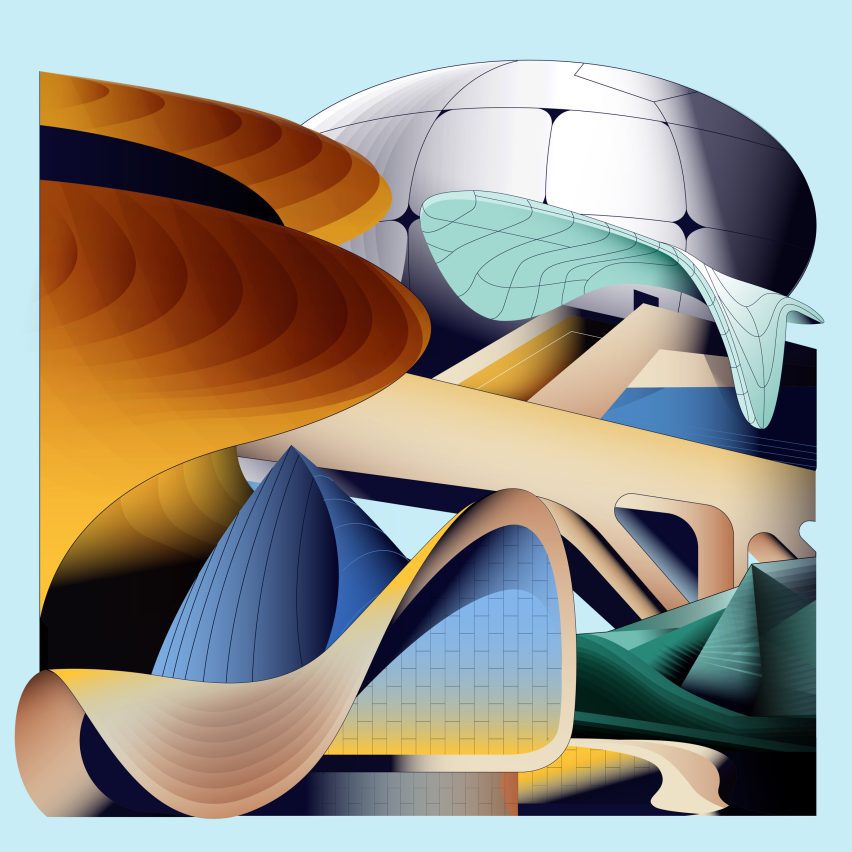
One of the most famous buildings linked to parametricism is the Heydar Aliyev Center, completed by Zaha Hadid in 2012. Though Hadid was not known to identify as a parametricist herself, the building has become synonymous with the movement thanks to its distinctive, wave-like skin formed from glass-fibre-reinforced concrete panels.
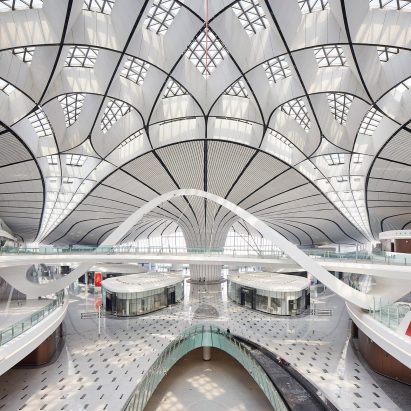
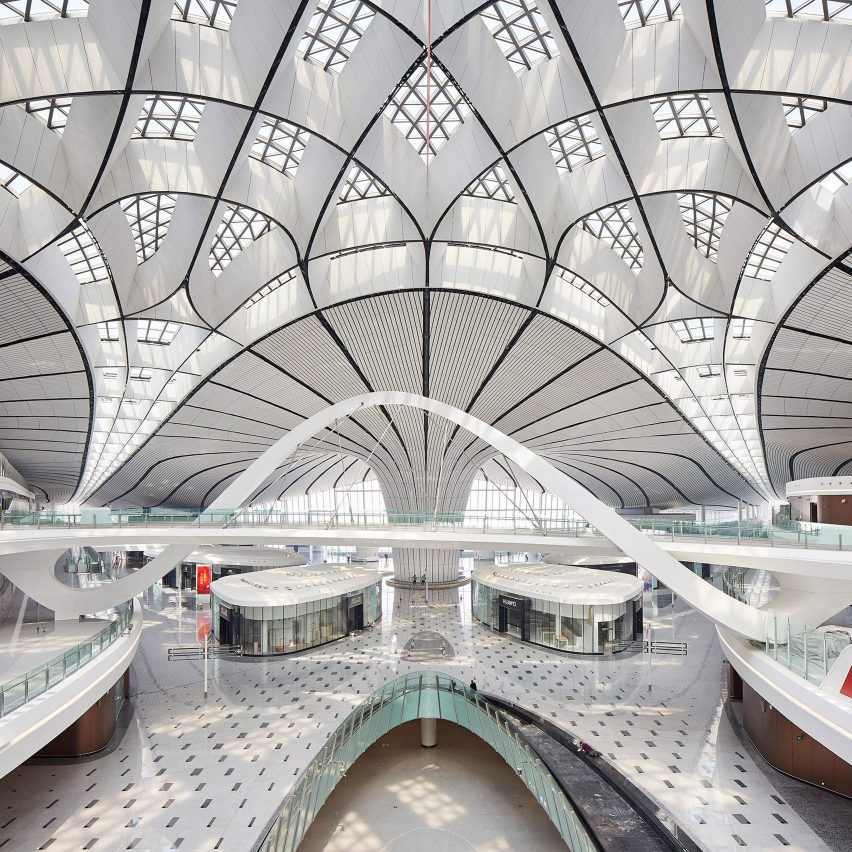
Others include the Yokohama International Passenger Terminal by Foreign Office Architects, completed in 1995, and Beijing Daxing International Airport by Zaha Hadid Architects (top image), completed in 2019.
When did parametricism begin?
The style was officially coined by Schumacher in 2008. However, many theorists cite its beginnings as much earlier.
Parametricism is widely considered an evolution of postmodern architectural movements such as blobitecture and foldism – movements formalised by architect Greg Lynn in the 1990s.
However, for other theorists, it starts well before the digitisation of architecture, with the works of 19th-century architect Antoni Gaudí and 20th-century architect Frei Otto, who both relied heavily on experiments in 3D modelling.
For Gaudí, this translated into upside-down chain models that he manipulated to develop arches, while Otto experimented with stretched fabric and inflatable forms, both functioning similarly to how digital parametric design software is used by architects today.
In Schumacher’s manifesto, he claims, “Frei Otto might be considered as the sole true precursor of parametricism”.
What are the benefits of parametricism?
By utilising parametric design techniques, architects of parametricist buildings are supported in quickly finding optimised solutions to complex problems, rather than resorting to trial and error, which can be wasteful in terms of time and material use.
Parametricist buildings can be highly efficient, designed to maximise energy efficiency and natural lighting, and minimise material usage in complex structures when compared to traditional design methods.
What are the main criticisms of parametricism?
A common criticism of parametricism is that its buildings are unnecessarily complex and that they overlook practical constraints, making them expensive to construct.
It is also attacked for being too focused on algorithm-driven aesthetics rather than local context or culture, resulting in self-referential buildings that offer little attachment to their sites.
An example of this is Zaha Hadid Architect’s giant Galaxy Soho shopping centre in Beijing. The large white aluminium and glass building looms over a labyrinth of narrow historic streets in Beijing and was accused by a local heritage protection organisation of “destroying” the city.
The main photo of Beijing Daxing International Airport is by Hufton + Crow.
Parametricism
This article is part of our series on parametricism, the theory of architecture developed by Zaha Hadid Architects principal Patrik Schumacher that lays claim to becoming the 21st century’s defining style.
The post A simple guide to parametricism appeared first on Dezeen.









Leave a comment