



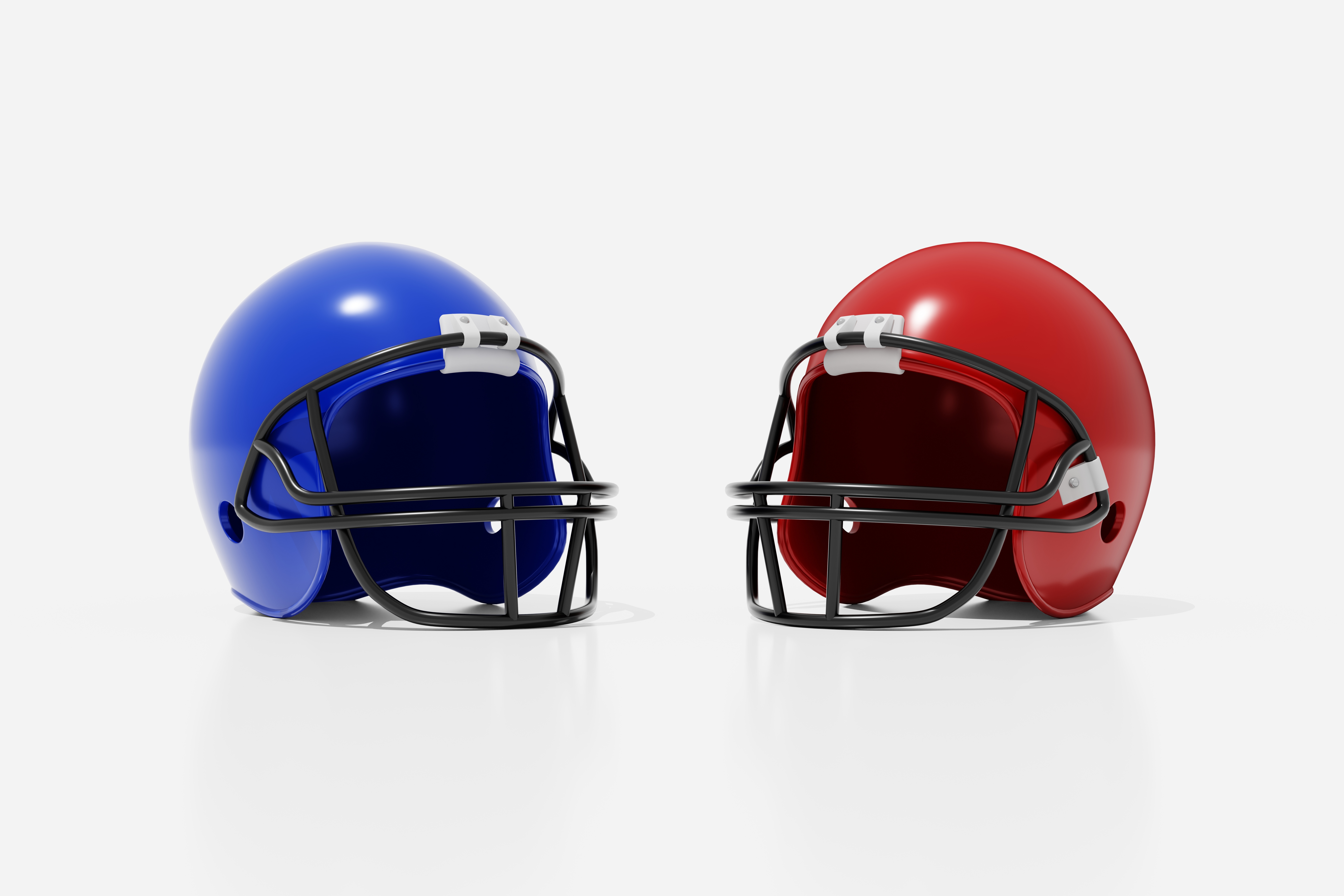
Yesterday’s Super Bowl offered more than a Seattle Seahawks win, a halftime performance from Bad Bunny, and beer ads. This year’s annual football extravaganza provided a vivid snapshot of how the long-running AI rivalry between OpenAI and Anthropic has erupted into a much noisier contest over perception, positioning, and power.
For the first time, Anthropic spent millions of dollars on several satiric Super Bowl spots. The ads had the headlines “Deception,” “Betrayal,” “Treachery” and “Violation,” and all carried the tagline: “Ads are coming to AI. But not to Claude.”
While the ads did not mention OpenAI by name, they were obviously a pointed jab at OpenAI’s plans to sell ads inside ChatGPT, and the ads pointed out that Anthropic has committed to keeping its Claude chatbot ad-free. OpenAI’s leadership pushed back publicly, defending its strategy and airing its own more earnest Super Bowl ad showcased its Codex tool, centered on “builders”—pushing the idea that anyone can build with AI.
The social media noise around the ads grew so loud in advance of the game that the feud spilled over into trolling and misinformation. Fabricated headlines began circulating on X, claiming last-minute changes to OpenAI’s Super Bowl ad—spurring OpenAI president Greg Brockman to call a Reddit post “fake news” and company Chief Marketing Officer Kate Rouch to call out an X post about a supposed story in the trade publication Ad Age that said OpenAI altered its Super Bowl ad at the last minute as a “fake headline and entire fake website.” (Which it was. The Ad Age reporter whose byline was supposedly on the story also took to social media to say she had not written the article.) Meanwhile, technology show TBPN lobbed its own made-up “news” into the X-sphere with Claude with Ads, a parody website.
A broader fight beyond models
What had for years been, at least publicly, a relatively restrained battle between the two companies over raw model performance—highlighted again by last week’s dueling releases of Claude Opus 4.6 and GPT-5.3-Codex—has now spilled into a broader fight over brand, trust, safety narratives, and ultimately who gets to define the next generation of intelligent AI agents.
In advance of the Super Bowl, OpenAI CEO Sam Altman was unusually direct in responding to Anthropic’s campaign, calling the ads “funny” but “clearly dishonest.” In a lengthy post on X, Altman wrote “Anthropic serves an expensive product to rich people. We are glad they do that, and we are doing that too, but we also feel strongly that we need to bring AI to billions of people who can’t pay for subscriptions.”
Anthropic, for its part, has largely let its marketing and published statements do the talking. Anthropic president Daniela Amodei insisted on Good Morning America that the ad wasn’t intended to be about OpenAI or “any other company other than us.”
Anthropic had previously targeted OpenAI without specifically naming them. In May 2025, Anthropic posted billboards around San Francisco reading, “AI that you can trust” and “The one without all the drama,” which many read as an oblique reference to the abortive boardroom coup against Altman at OpenAI in November 2023 and subsequent staff churn. And CEO Dario Amodei recently took a jab at its rivals’ “code red” moments, while not naming Google or OpenAI—both companies that have declared official “code reds” to respond to competitive pressure from rival AI shops. The billboards tried to position Anthropic as calmer and more deliberative than its competitors.
In a blog post published alongside the Super Bowl campaign, Anthropic said it was making a “principled decision” not to show sponsored links or ads inside its chatbot Claude. “The conversations people have with LLMs are often very personal,” the company wrote. “Using intimate details like these to serve ads didn’t feel like a respectful way to treat our users’ information.”
The public sniping continued even as play unfolded on the gridiron. Daniel Steigman, a member of the OpenAI Codex staff, wrote on X: “I much prefer OpenAI’s positive outlook on AI over Anthropic’s negative one during the Super Bowl ads. Almost like we believe in the brighter future we are building.”
OpenAI president Greg Brockman reposted Steigman’s post, adding “a fundamental difference in our respective outlooks on AI.”
A tonal shift
The unusually public back-and-forth marks a tonal shift for both companies. Historically, OpenAI avoided naming Anthropic directly, while Anthropic mostly kept its public comments framed around its own principles rather than calling out rivals’ alleged shortcomings.
Still, the rivalry between two of the most well-funded startups in history runs deep. Anthropic was founded in 2020 by Dario Amodei, his sister Daniela, and other former OpenAI employees who broke away over disagreements about safety, commercialization, and Altman’s leadership style. But a rivalry once centered on research direction and model capabilities is now playing out through competing narratives about trust, safety, and how AI is meant to be used in everyday work and decision-making.
The scale of the OpenAI-Anthropic rivalry is underscored by just how large—and different—the two companies have become. OpenAI is valued at roughly $500 billion, with more than 800 million users globally, but it remains far from turning a profit as it spends aggressively on infrastructure, compute, and consumer products. Anthropic, which is in the process of raising funds at a reported $350 billion valuation, is smaller by user count but has carved out a strong enterprise footprint and has told investors it expects to reach breakeven sometime in 2028—earlier than OpenAI—despite still burning billions annually.
It is unlikely the current flare-up over Super Bowl ads will be the only one between the two companies. While they were sparring over the ads last week, the two companies were also both launching competing products into the market. Both Anthropic and OpenAI released new flagship models—Claude Opus 4.6 and GPT-5.3 Codex—while OpenAI introduced Frontier, an AI agent platform expected to compete with Claude Claude and Cowork’s agentic workflows.
The stakes are enormous. So it’s not surprising that as the competition shifts from models to agents, and from benchmarks to real-world marketshare, and from technical stats to user perception, the OpenAI–Anthropic rivalry appears poised to intensify.
This story was originally featured on Fortune.com


Leave a comment