


Lebanon: UN warns of growing civilian risks as military activity continues
Following reports of Hezbollah drone attacks and retaliatory Israeli strikes on Wednesday and Thursday, UNIFIL is urging restraint and renewed political engagement to avoid a further escalation of hostilities.
UNIFIL spokesperson Kandice Ardiel told UN News that while the latest strikes occurred outside UNIFIL’s area of operations, the impact of the conflict continues to be felt across southern Lebanon and along the “Blue Line”.
Find out more about the Blue Line in our explainer here.
UNIFIL is urging all parties to comply with Security Council resolution 1701 – the 2006 agreement intended to cease hostilities between Israel and Hezbollah – and use existing mechanisms to de-escalate tensions.
“It’s in no one’s interest to continue on a military path,” Ms. Ardiel said. “The only solution to this is political and diplomatic.”
Although violence has decreased compared to previous months, UNIFIL has observed a rise in military activity inside its area of operations, including logistical movements, demolitions and projectile launches.
The mission continues to monitor developments closely and report violations, warning that renewed military activity risks undermining the fragile stability achieved in recent months.
Scale of damage harms civilians
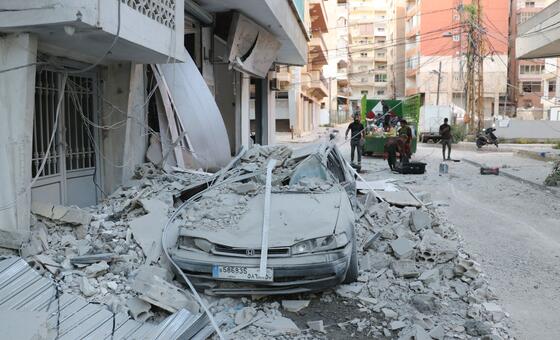
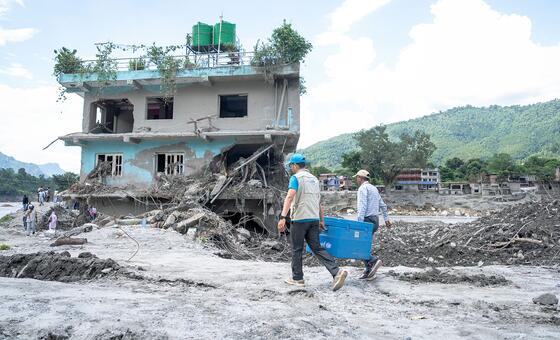
UNIFIL remains concerned about the scale of destruction across parts of south Lebanon. According to the mission, several villages and neighbourhoods have suffered severe damage, affecting homes, roads and civilian infrastructure.
The destruction has also restricted the movement of residents, many of whom face difficulties travelling between villages and accessing essential services. Humanitarian organizations and peacekeepers have faced similar logistical challenges while carrying out their work.
To help reduce risks on the ground, UNIFIL continues to coordinate with both the Lebanese Armed Forces and the Israeli Defense Forces, facilitating movement and helping prevent incidents through deconfliction mechanisms.
Peacekeepers regularly accompany certain movements to support safety and ensure humanitarian access where possible.
While peacekeepers continue to carry out their mandate, they have faced occasional delays at Israeli military checkpoints along the coastal road linking UNIFIL headquarters in Naqoura with Beirut.
“Peacekeepers have freedom of movement, and any interruption of that is a concern for us,” Ms. Ardiel said.
Political solution remains essential
With UNIFIL’s mandate set to expire at the end of this year, the UN remains concerned about the potential impact of a security vacuum left behind by its departure.
In a letter published in June, UN Secretary-General António Guterres outlined options for implementing resolution 1701 without UNIFIL’s presence, all of which involve a continued UN presence – albeit a smaller one – on the ground to monitor the Blue Line, plus a strengthened UN political office (UNSCOL) to promote peace and coordinate UN efforts.
UNIFIL continues to stress that a lasting solution cannot be achieved through military means alone. The mission is urging both parties to return to dialogue and implement measures that can restore security and stability for communities on both sides of the Blue Line.
Aid efforts hampered
On the humanitarian front, UNIFIL, in coordination with OCHA, facilitated humanitarian missions to reach those in need.
Since the Hezbollah-Israel conflict erupted in March, 900,000 people have received at least one round of emergency cash assistance, according to UN Spokesperson Stéphane Dujarric.
At the same time, humanitarian needs remain immense, yet available funding is insufficient to meet those needs, he said, noting that the six-month flash appeal requiring nearly $640 million to support people impacted by the escalation of the fighting is due to end in just four days and remains only half funded.
“We call for full respect for international humanitarian law, the protection of civilians, the protection of civilian infrastructure, the protection of humanitarian and aid workers as well as our peacekeepers while stressing that sustained humanitarian support is essential to meet the needs of communities affected by the ongoing hostilities,” he said.






Leave a comment