




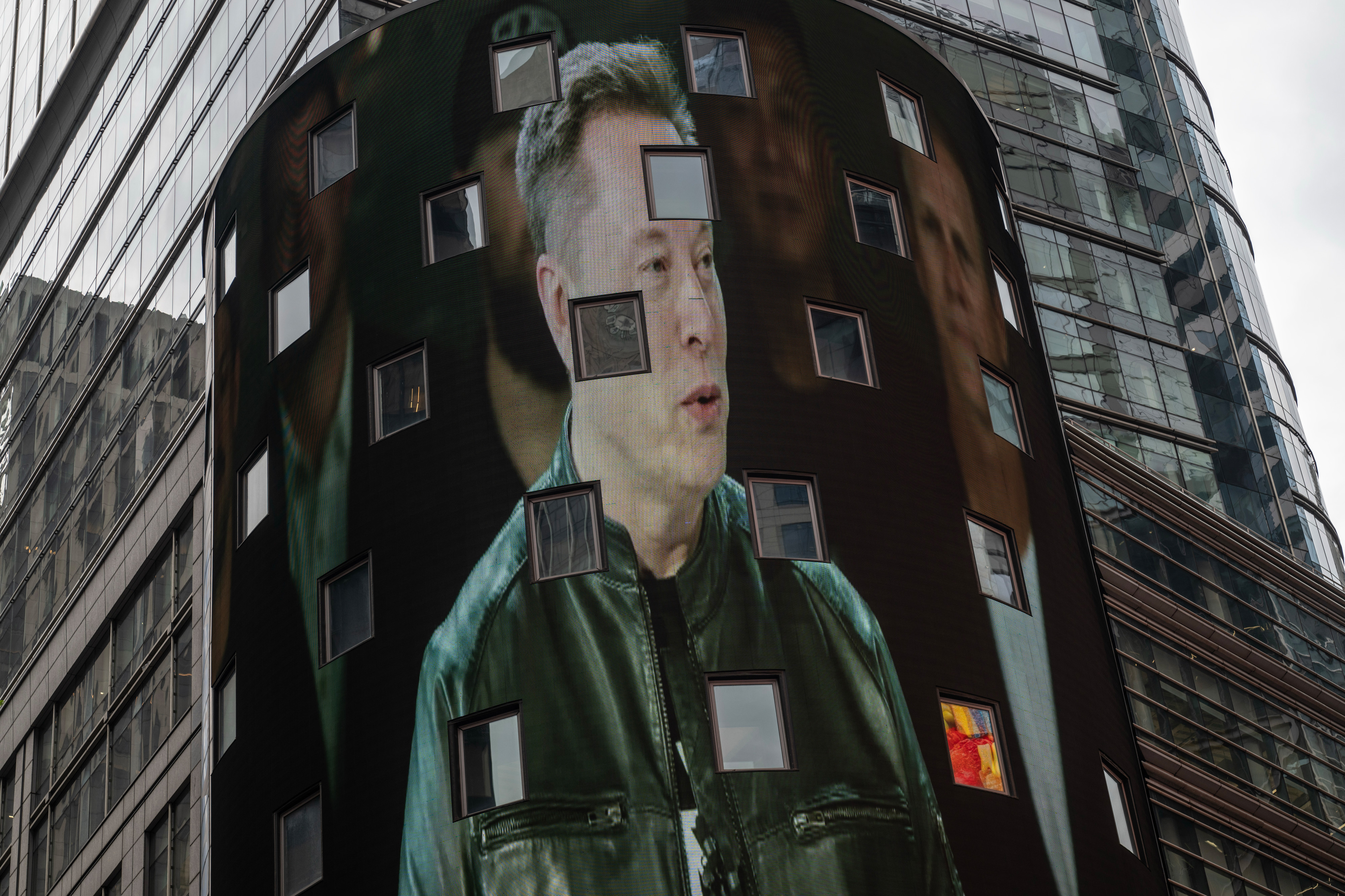
The business media and analyst community almost universally hailed the SpaceX debut on June 12 as achieving a kind of triumphal golden mean. The overwhelmingly positive take: The offering managed to simultaneously raise the biggest cash proceeds, and launch the largest valuation for a newly-traded U.S. enterprise ever seen, provide terrific quick gains for institutional and a coterie of anointed retail investors—yet avoid a huge first day pop that would penalize SpaceX by leaving a terribly large portion of the deal’s true value “on the table.”
The absolute dollar amounts that SpaceX (SPCX) sacrificed in going public, however, are staggering and precedent-shattering. Put simply, Elon Musk’s creation stands in urgent need of tens of billions to fund the giant capital expenditures required to power what it acknowledges as its principal growth engine, its new AI franchise. The towering sums that flowed in one-day profits to privileged investors who got shares at the IPO offer price on the cheap—and may reward the bankers who steered them those allocations by sending back lucrative, “soft dollars” trades—would have provided a lot more rocket fuel in the tank to sustain what Musk advertises as the fastest takeoff in the annals of capitalism.
From one viewpoint, the opening jump looks modest. On June 12, SpaceX shares spiked from the offer price of $135 to close at $160.75, a lift of 19%. According to stats assembled by Jay Ritter, the University of Florida professor who is the world’s leading expert on IPOs, the percentage increase precisely matches the average bump over the last several decades. Plus, because the markets valued SpaceX at $2 trillion by the first day close, the amount of “left on the table,” the difference between the total dollars the enterprise would have raised had it captured the $160.75 the funds and folks were willing to pay, and the $135 pre-fee number Musk put in the treasury, tallies to a seemingly non-shocking 0.8% of SpaceX all-in market cap.
Still, the count of foregone billions reigns as by far the biggest in IPO history for ordinary share offerings. Ritter provides extensive rankings for the largest amounts left on the table. His official number for SpaceX is $14.5 billion. But Ritter’s methodology targets the one-day figure. He doesn’t include the “over-allotment,” or “Green Shoe,” of an extra 15% that the issuer awards the banks at the IPO price for distribution to the same investors if the shares rise on day one; if the IPO tanks, the underwriters blunt the selling and act as a stabilizer by re-purchasing the extra 15% at the higher offering number. As Ritter told Fortune, the total proceeds SpaceX won’t collect, measured through the time the Green Shoe shares are dispensed, will be $16.7 billion ($14.5 billion plus 15%).
The $16.7 billion that SpaceX effectively sent elsewhere is almost triple the former record of $5.9 billion, set in the 2008 Visa offering. In fact, for only five IPOs did the first day pop (including the Green Shoe) exceed $4 billion. The total for the former first four on the list, Visa, Airbnb (2020), Cerebras Systems (2026), and Snowflake (2020) barely surpasses the rocket and AI giant’s mark. (The 2014 offering of Alibaba left over $9 billion on the table, still just over half the SpaceX total, but isn’t included in Ritter’s table since it deployed ADRs not regular shares.)
The $16.7 billion left on the table represents a big cost for SpaceX’s business, and is only small vs its celestial valuation
While the marvel of SpaceX’s never before witnessed $86 billion raise (including the 15% over-allotment) and $2 trillion-plus market cap got all the buzz for their over-the-top bigness, its fundamental numbers as an ongoing business are small. Last year, SpaceX posted a mere $18.7 billion in revenue, just 12% more than what the day one leap delivered its IPO investors.
What hurts most: SpaceX is short on future funding for its ultra-costly ramp in AI. Last year, the capex dedicated to AI amounted to $12.7 billion, absorbing 81% of its expenditures on plant and equipment. In Q1, the outlays for data centers, GPUs and the like jumped to $7.7 billion, and the S-1 filing strongly implies that they’ll swell rapidly from there. As the document advises on page 12, “Our AI business is in a relatively early stage, it is being integrated into our organization, its business strategy is still developing, and it will require significant capital expenditures to fund compute, infrastructure and power generation, model training, and product development.”
Even now, SpaceX isn’t generating nearly enough cash from operations to support the vast AI expansion initiative. In the past five quarters, it’s lavished $31 billion on capex, four times the cash collected from running its businesses. Reason: The deep operating losses in AI, alongside lesser deficits on the rocket side, are dwarfing profits from its one money-spinning franchise, the robust Starlink satellite mobile and broadband arm.
To make matters worse, most of the vaunted sums amassed from the IPO are spoken for. The S-1 disclosed that SpaceX has committed $62.6 billion, or 71% of the $86 billion raised in the offering and Green Shoe, for amounts owed to several parties, including the repayment of a loan from Tesla, Musk’s second largest holding, and to EchoStar for “Spectrum Acquisition Closing.” That leaves just $23 billion available for covering AI capex.
At the end of Q1, SpaceX was sitting on cash of $24 billion. Hence, the IPO take plus those reserves total less than $50 billion. The AI spending on capex and R&D are accelerating so fast that SpaceX could easily burn through that number in less than a year. That’s why the $16.7 billion that went to the investor windfall, and not to SpaceX, is so important. Getting that money would have bolstered SpaceX’s $50 billion war-chest by one-third.
The “left on the table” number worsens a principal threat investors face in owning SpaceX stock: the prospect of big dilution. The bar to rewarding shareholders is already super-high simply due to the stratospheric valuation. SpaceX didn’t stop climbing on June 12. By the market close on June 18, it had vaulted another 15% to $185.00. That lifted its valuation to $2.44 trillion, or 36% over the famously cited $1.8 trillion it would have commanded at the $135 offering price. Days before the IPO, David Trainer, CEO of research firm New Constructs, ran discounted cash flow numbers estimating the revenues SpaceX would need by 2035 to hand shareholders decent returns, were they able to buy at $135. His number is $1.1 trillion. That’s 50% more than the top line in America over the past four quarters, Amazon’s, $743 billion.
By my estimate, SpaceX would require revenues of $1.5 trillion, well twice Amazon’s and almost 3.5x Apple’s, ten years hence for anyone buying the shares now to make fairly good money. Elon Musk pretty much agrees. In a X message over the post-IPO weekend, he posited sales of $1 trillion by 2031.
But SpaceX is running big cash flow deficits, and its less than $50 billion cash pile won’t last long. Investors should worry, where is the money for all of this stupendous, up-front, pre-big-profit AI campaign supposed to come from? The answer may be frequent stock issuance. We’re already seeing a case in point. On June 16, SpaceX announced that it’s purchasing coding agent Cursor for $60 billion in an all-stock transaction. The number of new shares SpaceX issues Cursor owners will be based on their average end-of-day price in the seven days that precede the closing. But even at today’s valuation of $2.6 trillion, the deal would dilute SpaceX’s shareholders by 2.4%. If its price retreats from these incredible heights by before SpaceX clinches the deal, that number will rise.
As SpaceX shows by paying stock not cash for Cursor, harboring shares that by all fundamental measures look highly inflated carries a major advantage in making acquisitions—the tie-up would water down SpaceX shareholders a lot more if its market cap weren’t on such a tear. It also provides another edge: You can raise relatively large amounts of cash by selling relatively small numbers of new shares, compared to the overall float. That means for now, SpaceX could pay for copious capex sans too much dilution. That equation won’t work if the price falls. And if SpaceX relies on share sales rather than highly profitable operations to fund its capex charge, investors will catch on and send its stock price lower, making it increasingly costly to use new equity as the currency for financing its AI expansion.
It’s interesting that Musk, one of the greatest tech mavericks of all time, didn’t defy Wall Street, and insist on getting full value for the shares sold in the IPO. The examples are out there. Google used a Dutch Auction process in its 2004 debut, and Palantir (2020) and Spotify (2018) deployed “direct listings,” where the company doesn’t engage Wall Street underwriters. Instead, market makers on the exchanges match buy and sell orders to establish a price where supply meets demand before the start of trading. That template eliminates the bounce so that the selling shareholders get the full price investors are willing to pay, and prevents the underpricing from the investment banks that’s so prevalent in IPOs.
Elon Musk is now bragging that SpaceX will make epic investments en route to unleashing stupendous results. To kickstart the SpaceX miracle, he could sorely use that $17 billion he left behind.
This story was originally featured on Fortune.com




Leave a comment