




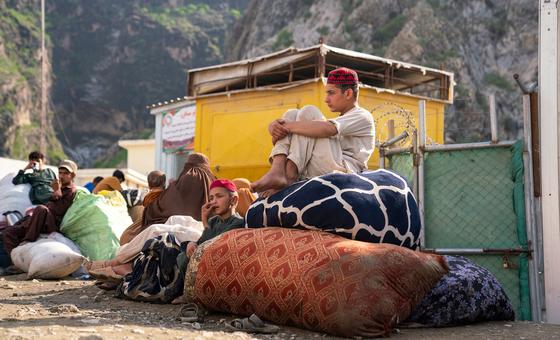
Fears grow for ordinary Afghans after further clashes with Pakistan
The UN Secretary-General António Guterres said he was “deeply concerned by the escalation…and the impact that violence is having on civilian populations.”
He called for an immediate cessation of hostilities and reiterated his call for the two countries to “resolve any differences through diplomacy.”
Echoing that call for dialogue between Kabul and Islamabad, top Human Rights Council independent expert on Afghanistan, Richard Bennett, said that growing tensions between the two countries have increased the difficulties and dangers for Afghans forced to return to their country.
Fearful future
“I was recently in Pakistan, I spoke to Afghans there, who are extremely fearful of their futures,” he said.
“They believe that returning to Afghanistan will not only be a life in poverty, but for certain groups, human rights defenders, journalists, members of security, for previous government security forces, they run a real risk of violent retaliatory attacks. And we have been seeing an uptick in those in recent months.”
The independent Special Rapporteur on Afghanistan, who does not work for the UN and is not paid for his work, called for “cool heads” amid rising regional and geopolitical tensions, underlining hopes that “third parties will be listened to”.
In recent years, Afghanistan has seen huge numbers of nationals – estimated at 2.7 million in 2025 – return from neighbouring countries including Pakistan, whose jets reportedly struck major cities including Kabul and Kandahar overnight into Friday.
Pakistan’s defence minister said on Friday that his nation was embroiled now in “open war” with Afghanistan. There have been months of sporadic clashes across the border – despite a ceasefire being declared last October.
Humanitarian hardship
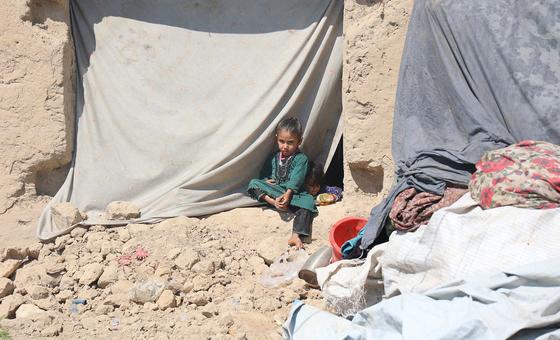
The dramatic escalation will increase hardships for the people of Afghanistan, Mr. Bennett noted, as he stressed the disastrous humanitarian conditions confronting them, linked to the Taliban’s return to power in August 2021.
Healthcare is just one area of daily life deeply and negatively impacted by the de facto authorities, whose decrees purportedly aimed at promoting virtue and tackling vice have been widely condemned outside the country as a form of gender apartheid severely impacting women and girls.
“In large parts of the country, medical treatment is segregated, so women must be treated by other women, and men by men,” Mr. Bennett explained. “There’s overall a reduction in medical workers, not just doctors; we’re talking midwives, nurses, the whole health worker system.”
Although there is some evidence that the Taliban’s restrictive decrees on health care are not implemented as strictly everywhere, “it’s not just the treatment, it’s getting to the treatment [that] is problematic; there’s such restrictions on freedom of movement”, Mr. Bennett explained.
Afghanistan’s health system was already fragile before the Taliban overran Kabul after decades of conflict, poverty and under investment, Mr. Bennett continued, as he underlined the risk of a “full scale health catastrophe, especially for women and girls”.





Leave a comment